AI Native Netherlands hit 2,000 members!
How a meetup that started because we were bored of AI events grew into a community of more than 2,000 engineers in Amsterdam.

 9 mins read
 26 Sept 2026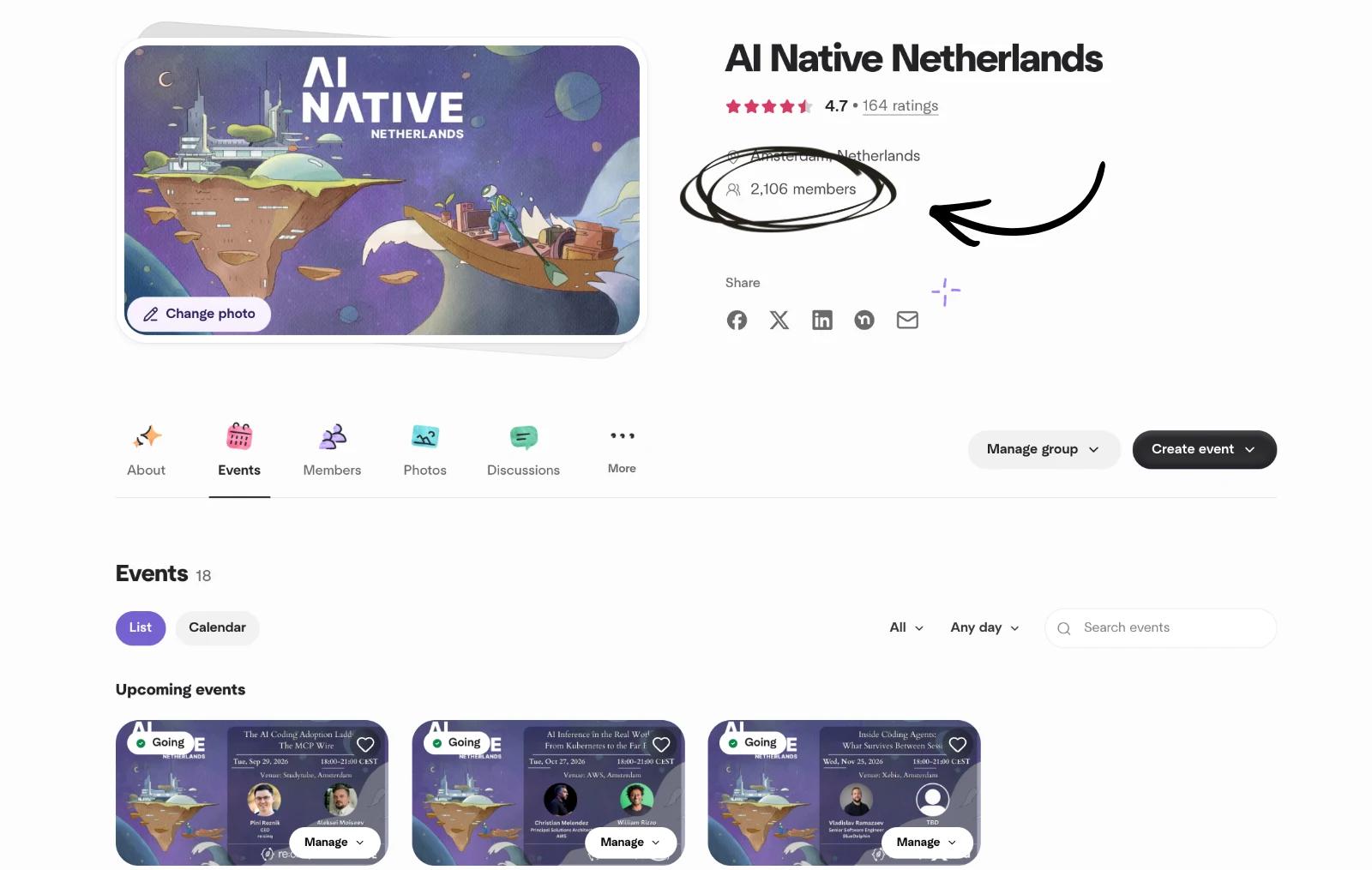
AI Native Netherlands just passed 2,000 members.
We're at 2,106 as we write this. That means 2,106 people behind the number: engineers, architects, engineering leaders, AI people, Cloud Native people, regulars who seem to be at every meetup, and people who joined because one particular talk sounded interesting.
For something that started mostly because we were getting a bit bored of the AI events we kept going to, it has grown into much more than we expected.
So before the next meetup, we wanted to look back at how it started, what it became, and say thank you to everyone who has been part of it.
Why we started it
If you went to AI events in Amsterdam a couple of years ago, you probably know the type.
A sales pitch dressed up as a technical talk. A stage and a lanyard. Three presentations in a row. Lots of talk about how AI was going to change everything, without getting particularly close to what people were actually doing with it.
Some of those events were good. But they often felt too formal, too commercial and, frankly, a little boring.
We wanted to create something different.
The idea was to get together roughly once a month, preferably somewhere new every time. Visit companies we normally would not get to see from the inside. Listen to a couple of genuinely useful talks, eat something, drink something, and give people enough space to actually meet each other.
Nothing more complicated than that.
Where it started
The first AI Native Netherlands meetup was on 27 May 2025 at Vandebron.
Pini Reznik opened with a talk about the shift from Cloud Native to AI Native, and Homero Valle from Triskale gave the second talk.
A lot of the people in that first room came from the Cloud Native world. AI was moving quickly, everyone was experimenting with different things, and nobody really knew where it was all going.
In hindsight, that uncertainty was probably part of what made the meetup work. There was already more than enough AI content online. What people seemed to want was somewhere they could compare notes with other people trying to figure it out too.
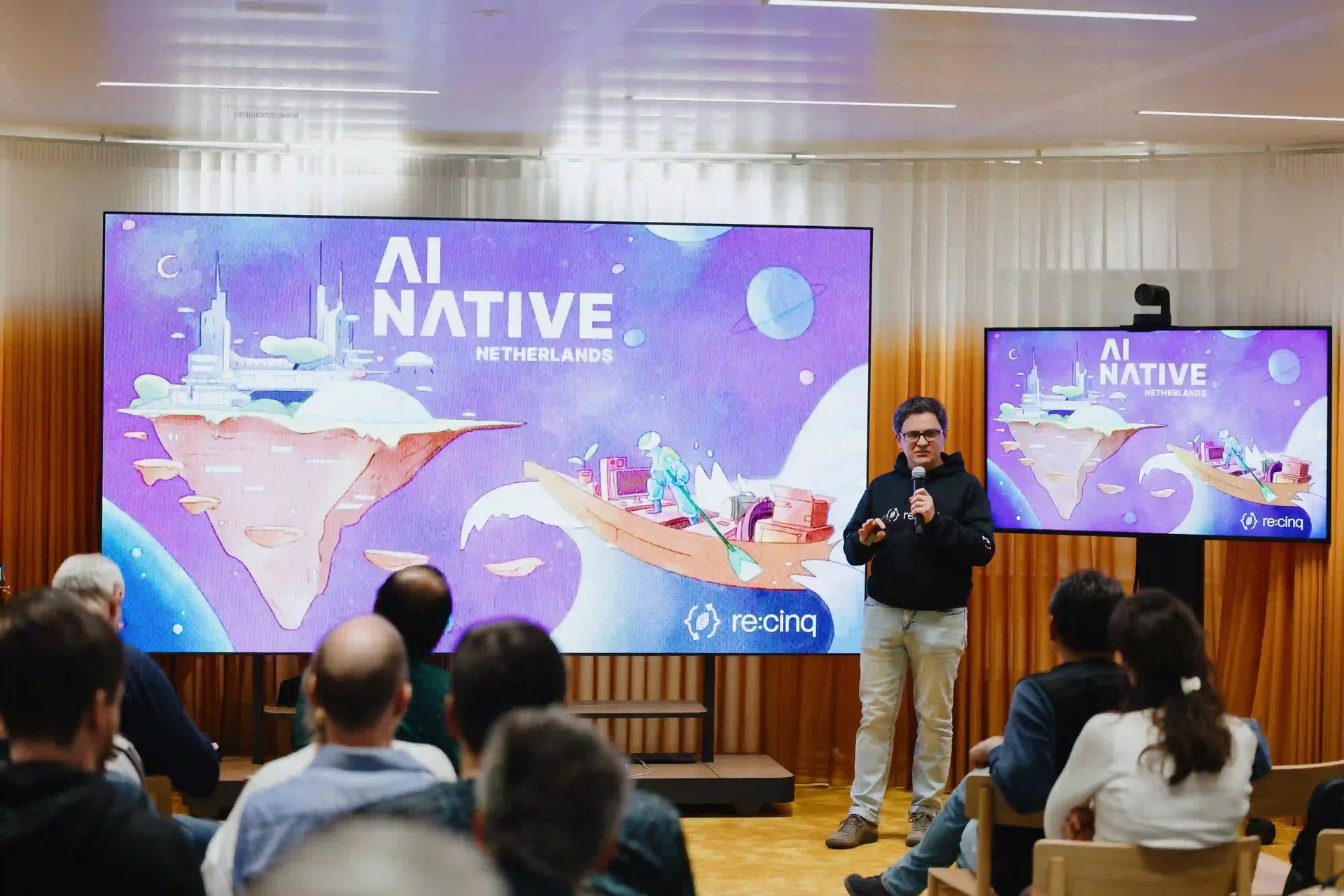
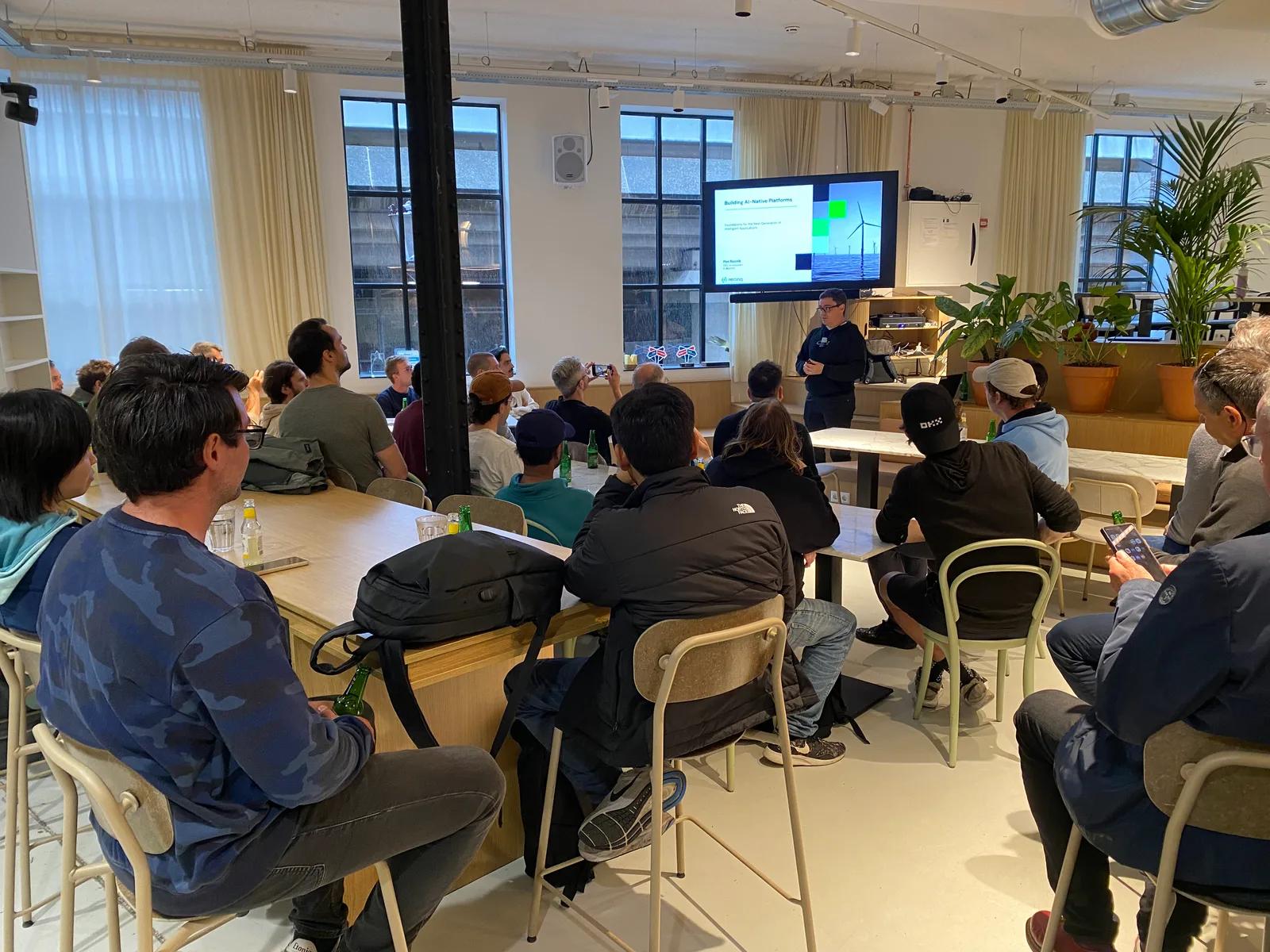 Pini Reznik giving the opening talk at the first AI Native Netherlands meetup at Vandebron, May 2025.
A different place every month
After Vandebron, more companies started opening their doors to us.
Cisco, Datadog, ING, Xebia, Elastic, TomTom, Miro, Adyen, Yuma, Cloudflare, and others.
The constant change of scenery became a part of our identity.
Every event feels different and refreshing. One month you are standing in Miro's office. The next you are at Adyen. A few weeks later you are somewhere completely different talking about agents over pizza.
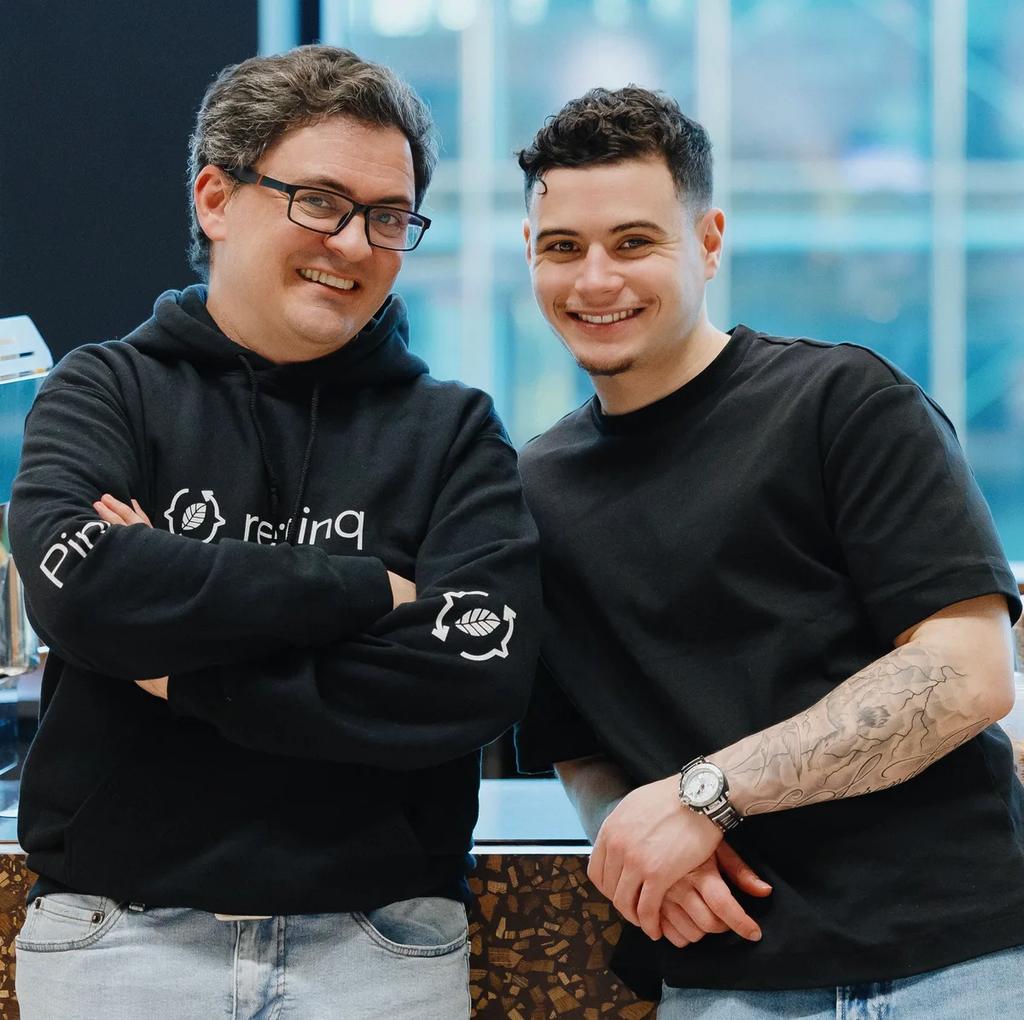 The two organisers of AI Native Netherlands, Pini Reznik and Yonatan Reznik, at the Miro meetup in April 2026.
There have been some memorable evenings.
At ING, Pini gave a talk about writing a book with AI and ended up signing copies of his book, From Cloud Native to AI Native, afterwards.
At Elastic, we focused much more heavily on practical use cases after hearing the same thing from the community again and again: less "AI is going to change everything," more "show me what is actually going on."
At TomTom, we experimented with an open panel after the talks and let the audience keep the conversation going rather than ending the evening as soon as the presentations were done.
But those individual moments are only a small part of the story.
We've had so many more evenings where people met for the first time and later became friends. People found new jobs. Engineers went back to work the next morning with an idea they wanted to try. Speakers got challenged on something they had not thought about before. People who arrived knowing nobody left with five new LinkedIn connections and somebody to grab a beer with next time.
We fed a lot of stomachs, drank probably too much beer, moved a lot of chairs around offices in Amsterdam, and slowly built a community of like-minded people who are all trying to answer roughly the same question:
Where the hell is all of this AI stuff actually going?
The conversations kept changing
One of the nicest things about running the meetup for a year and a half is being able to look back at the topics and see just how quickly the conversation has moved.
At the beginning, a lot of it was about getting AI systems into production in the first place. RAG, security, evals, hallucinations, testing, infrastructure.
Then coding assistants became coding agents.
MCP appeared.
People started experimenting with multiple agents. Engineering teams started asking what happens when AI writes a meaningful percentage of the codebase. The discussion moved from individual tools to architecture, workflows, adoption and how entire engineering organisations might change.
Our September meetup with Cloudflare was a good example. Raul Tavares talked about moving beyond a single coding agent towards multi-agent systems, while Michiel van der Ros from TomTom talked about making existing codebases easier for agents to understand. The meetup had 163 attendees.
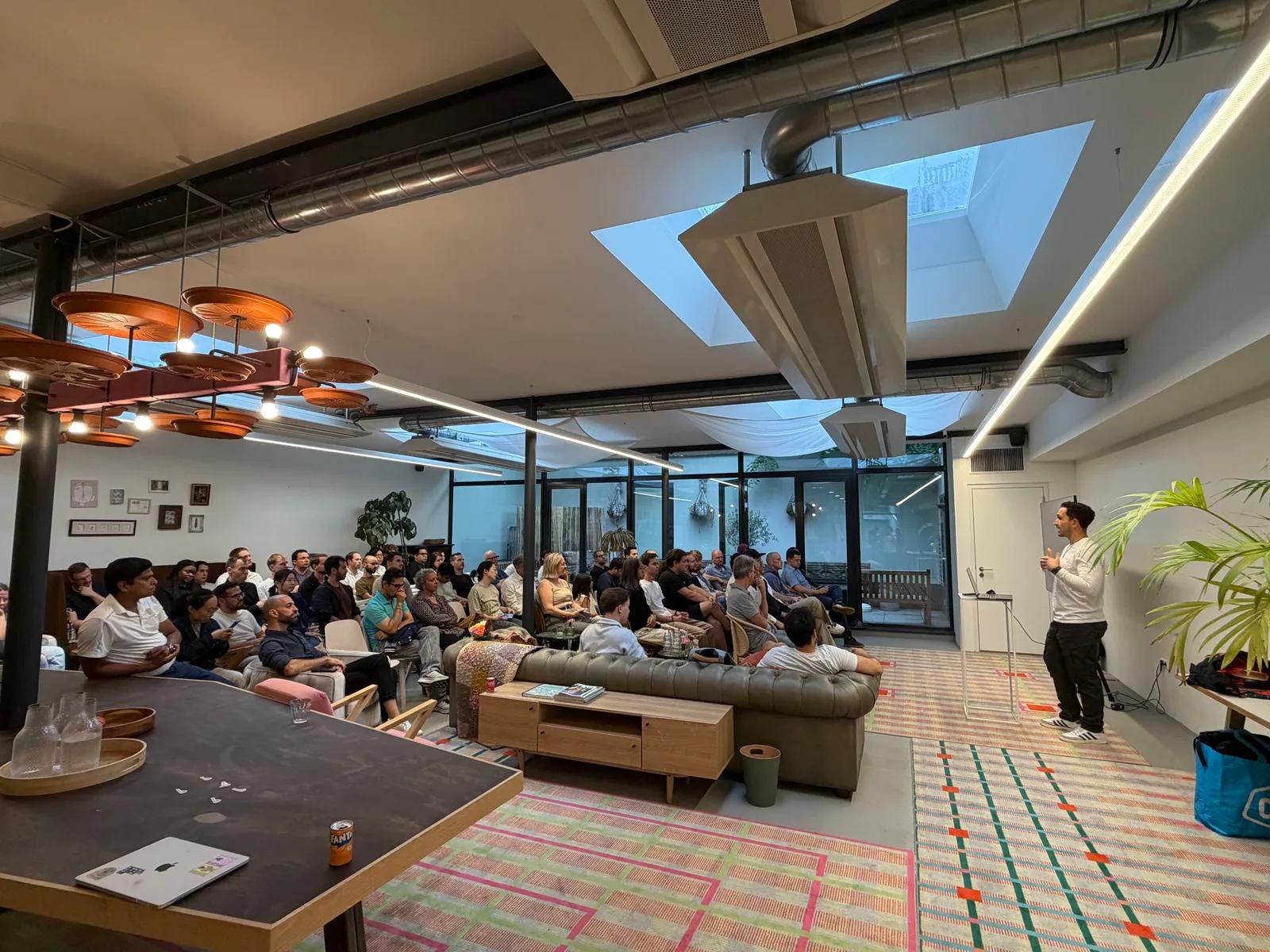 Raul Tavares from Cloudflare speaking about engineering with multi-agent AI at our September 2026 meetup.
A year earlier, those would have felt like very niche subjects.
Now half the room has an opinion on them.
That is probably the most interesting thing about this community: nobody really knows what the engineering profession will look like five years from now. We are just getting together once a month and trying to understand it as it happens.
More than the talks
The talks and speakers are very important, and we have always tried to keep them technical and in depth. But it is clear that they are only part of why the community has grown so much, so quickly.
A meetup gives you something that is difficult to recreate online. You run into someone you spoke to three months ago at Miro. Someone introduces you to a colleague because you are both struggling with the same problem. A question from the audience turns into a half-hour conversation after the talk. Someone who came alone for the first time suddenly knows a few people when they walk into the next event.
Often, people leave with five more LinkedIn connections and someone to grab a beer with next time.
There are engineers, architects, engineering managers, CTOs and researchers, some working with AI every day and others still trying to understand what it means for their team. Some live around the corner, while others take a train into Amsterdam after work because the topic or speaker sounded worth the trip.
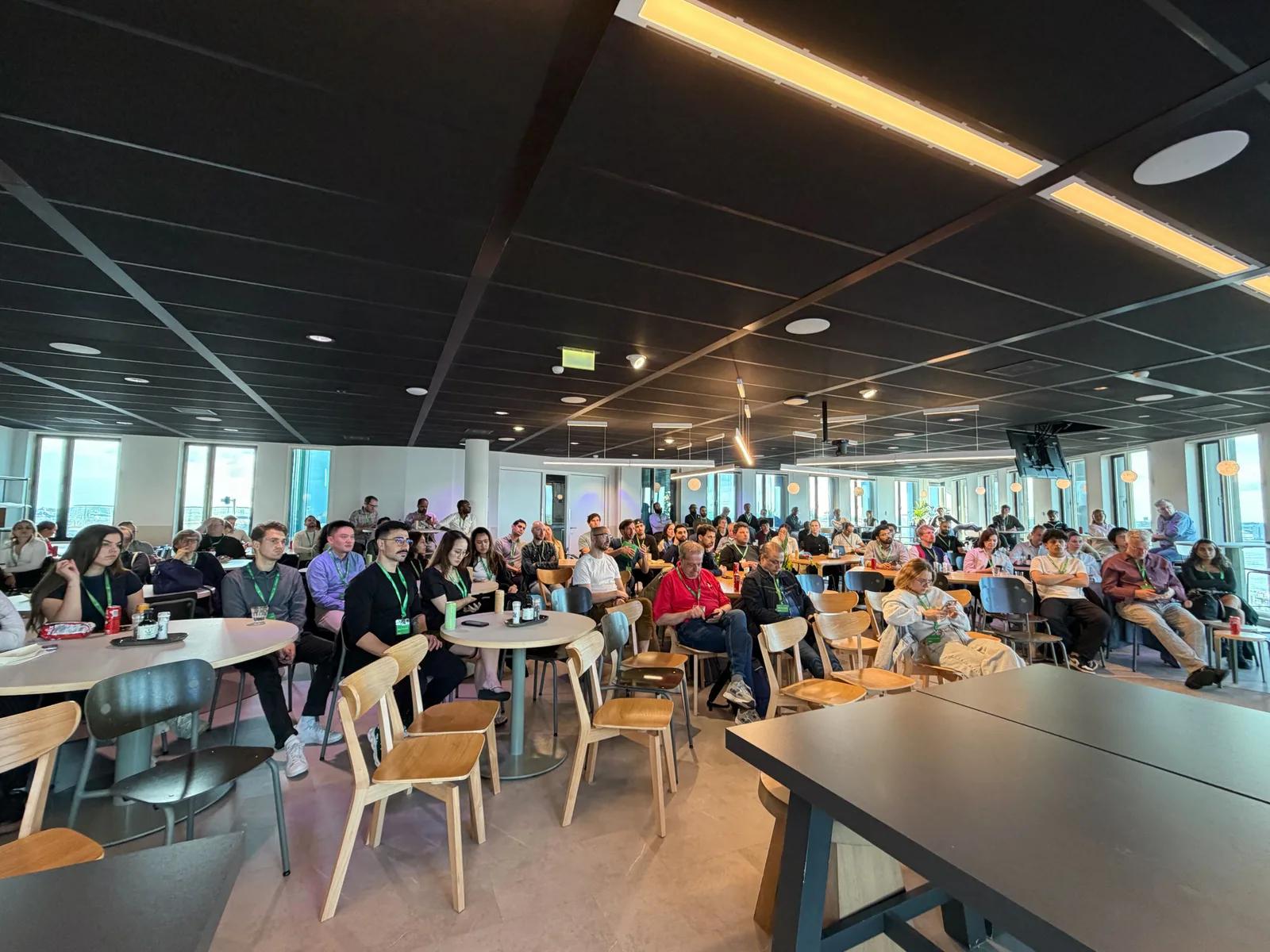 A full house at Adyen in May 2026, with 110 people attending.
Over time, people have become friends. People have found new jobs through someone they met at an event. Engineers have taken ideas from a talk or a conversation back into their companies and tried them the next morning. Speakers have met future colleagues, customers and collaborators.
We have also fed a lot of stomachs, emptied more beer fridges than we can count, and learned that ordering the right amount of pizza for a meetup is apparently impossible.
Those things are harder to put into a Meetup statistic, but they are the part we value most.
Between the talks, the drinks afterwards, the familiar faces and the endless conversations about what AI is doing to software engineering, a group of people who were interested in the same subject started to actually know one another.
That is what we hoped for when we started, even if we did not really know what it would look like yet.
To create a community.
2,106 people behind the number
So passing 2,000 members is worth celebrating, but not because we have been watching a counter go up.
There are now 2,106 people behind that number. Some have been with us almost from the beginning, some joined last week, and plenty will probably come to one event because a particular topic interests them and never appear again. That is completely fine. A community does not need everyone to participate in the same way.
What matters is that thousands of people have, at some point, decided this was a conversation they wanted to be part of. Hundreds have given up an evening after work to join us in person. Speakers have spent their own time preparing talks and answering questions.
Companies have handed us their offices for a night, ordered food for a room full of strangers and trusted us not to completely destroy the place. And a growing group of familiar faces keeps turning up month after month.
Our 4.7 rating on Meetup is something we are proud of too, mostly because this audience is not particularly easy to impress. Engineers tend to have opinions, and ours are usually very happy to share them. That feedback has helped shape the meetup just as much as anything we planned ourselves.
So thank you to everyone who has hosted us, spoken at an event, travelled across the country to attend, asked a question, brought a colleague, stayed for another drink, or simply joined because you wanted to see where this whole thing was going.
The answer, unfortunately, is that we still have absolutely no idea.
But at least there are now 2,106 of us trying to figure it out together.
What comes next
There are three more AI Native Netherlands meetups before the end of 2026, and together they are a pretty good reflection of where the conversation is heading.
On 29 September, we are at Studytube for our 12th edition. Pini Reznik will talk about the AI Coding Adoption Ladder and what engineering organisations actually go through as AI-assisted development spreads across a team. Aleksei Moiseev from Studytube will go deeper into MCP and what happens when you move beyond the clean examples in the documentation and start building with it for real.
On 27 October, we move to AWS for an evening about AI inference in the real world, from Kubernetes environments to the far edge, with Christian Melendez from AWS and William Rizzo from Mirantis.
Then, on 25 November, Xebia hosts the final meetup of the year, with Vladislav Ramazaev from BlueDolphin speaking about what coding agents remember between sessions, alongside a second talk from Xebia.
After that, we start planning for 2027.
Join AI Native Netherlands on Meetup if you want to be part of the next conversation.
And thank you all.
The AI Native Netherlands team
Your next read
AI Native Netherlands Hits Its Biggest Meetup Yet
The 9th AI Native Netherlands packed Miro HQ Amsterdam with 187 attendees, with the community now past 1,000 members in under a year.
Yonatan Reznik3 mins read
Subscribe to Our Bi-Weekly AI Native Newsletter
Lessons from our client work, engineering deep-dives, and the AI Native research worth reading.
Bi-weekly. No spam, unsubscribe anytime.
 2mins
2mins