
Make Your Legacy Code Ready For AI
We modernise your legacy code with AI, so AI can work on it — and run it on the same platform as your new systems.
Trusted by engineering teams at






Legacy systems often lack the engineering foundations
AI agents rely on: automated tests, documentation, modular architecture, and reliable delivery pipelines. Without them, agents cannot safely understand, modify, or validate the code they generate.






The Foundations Agents Need
The Maturity Matrix
The Maturity Matrix assesses nine dimensions of engineering maturity. It identifies the capabilities required for AI Native software delivery, with Cloud Native serving as the prerequisite.
| Stage | No Process | Waterfall | Agile | Cloud Native |
|---|---|---|---|---|
| Culture | Individualist | Predictive | Iterative | Experimental |
| Product Management | Ad hoc requests | Fixed long-term plan | Feature backlog | Continuous discovery |
| Delivery | Irregular, manual | Scheduled releases | Regular sprints | Continuous delivery |
| Process | Ad hoc / heroics | Waterfall gates | Agile ceremonies | Measured, automated flow |
| Team | Isolated experts | Functional silos | Cross-functional squads | Autonomous, DevOps |
| Architecture | Tightly coupled | Monolith | Client–server / tiers | Microservices |
| Reliability | Manual testing, late | QA phase at the end | Automated unit tests | Full test automation, SLOs |
| Provisioning | Hand-built by hand | Scripted, ticketed | Config management | Self-service, GitOps |
| Infrastructure | Single server | Racked datacentre | Virtualised / hosted | Elastic, container-based |
Where most legacy systems sit today.
| Stage | No Process | Waterfall | Agile | Cloud Native |
|---|---|---|---|---|
| Culture | Individualist | Predictive | Iterative | Experimental |
| Product Management | Ad hoc requests | Fixed long-term plan | Feature backlog | Continuous discovery |
| Delivery | Irregular, manual | Scheduled releases | Regular sprints | Continuous delivery |
| Process | Ad hoc / heroics | Waterfall gates | Agile ceremonies | Measured, automated flow |
| Team | Isolated experts | Functional silos | Cross-functional squads | Autonomous, DevOps |
| Architecture | Tightly coupled | Monolith | Client–server / tiers | Microservices |
| Reliability | Manual testing, late | QA phase at the end | Automated unit tests | Full test automation, SLOs |
| Provisioning | Hand-built by hand | Scripted, ticketed | Config management | Self-service, GitOps |
| Infrastructure | Single server | Racked datacentre | Virtualised / hosted | Elastic, container-based |
Where most legacy systems sit today.


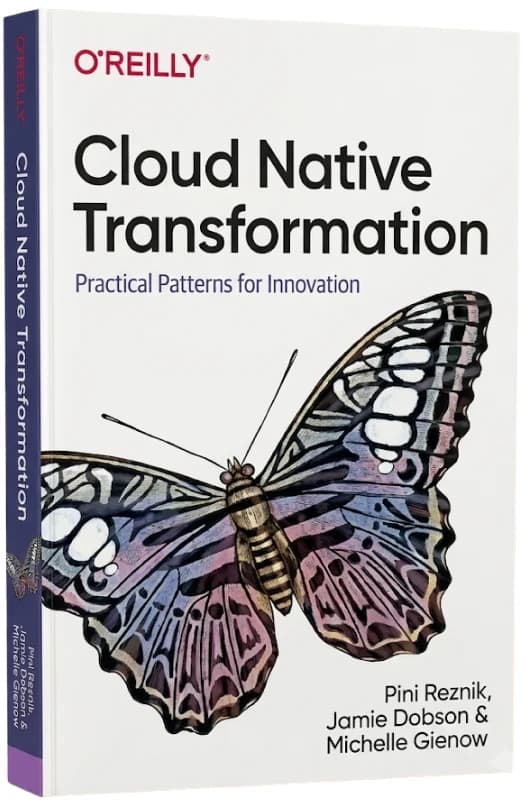

The Leading Book on Cloud Native Transformation
Published by O'Reilly and written by re:cinq's leadership, Cloud Native Transformation became the reference guide for moving enterprise software from legacy to Cloud Native.
Common Modernisation Mistakes
Anti-pattern
Every team invents its own migration process
The right way
One shared process, applied consistently across teams
Anti-pattern
Over-standardising every application.
The right way
Standardise the platform; keep domain code idiomatic.
Anti-pattern
Allowing AI to refactor without human validation.
The right way
Human oversight at every meaningful gate.
Anti-pattern
Leaving legacy permanently separate.
The right way
One destination platform. Progressive migration.
Anti-pattern
Every team invents its own migration process
Anti-pattern
Over-standardising every application.
Anti-pattern
Allowing AI to refactor without human validation.
Anti-pattern
Leaving legacy permanently separate.
The re:cinq Method
Think
Assess the engineering estate, identify the primary constraints, and define the transformation roadmap.

Design
Validate the target architecture on one or two real applications before scaling it across the organisation.
Build
Modernise applications, establish the AI Native platform, and onboard teams using repeatable engineering practices.
Run
Operate, optimise, and continuously improve the platform before transitioning ownership to your engineering teams.
How We Modernise Legacy Systems
Build the AI Native MVP on one or two legacy applications, establishing the platform, AI agents, CI/CD, testing, and engineering standards.
Deploy the MVP in a sandbox, then bridge it to the legacy estate so both environments operate together during migration.
Turn the first migrations into a repeatable onboarding process for the next applications, with shared tooling, templates, automation, and standards.
Use the proven process to onboard applications and teams. As the platform matures, each migration takes progressively less time and effort.
Retire the legacy delivery model. Legacy and greenfield applications now share one AI Native platform, engineering process, and operating model.

Factory MVP on 1–2 Real Applications
Build the AI Native MVP on one or two legacy applications, establishing the platform, AI agents, CI/CD, testing, and engineering standards.

Sandbox, Then Bridged Go-Live
Deploy the MVP in a sandbox, then bridge it to the legacy estate so both environments operate together during migration.

Standardise The Process
Turn the first migrations into a repeatable onboarding process for the next applications, with shared tooling, templates, automation, and standards.

Onboard The Estate
Use the proven process to onboard applications and teams. As the platform matures, each migration takes progressively less time and effort.

Retire The Legacy Platform
Retire the legacy delivery model. Legacy and greenfield applications now share one AI Native platform, engineering process, and operating model.
Common Questions
AI needs a safety net. Without reliable tests, documentation and automated delivery, agents can introduce mistakes without anything catching them.