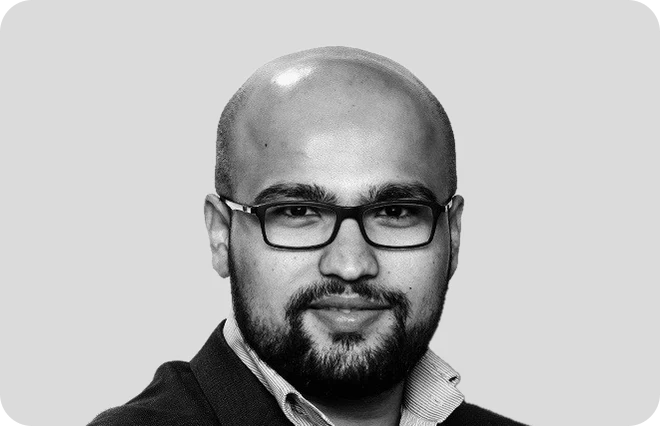
I’m Sufyaan, and I joined re:cinq on 1 October as a Lead AI Native Engineer. I wanted to share a little about my background, the work that brought me here and what I’m looking forward to as I get to know the team.
My career has taken me through quantitative finance, consulting, data engineering and AI architecture. I’ve enjoyed getting to know different industries and working with people who approach the same problem from different perspectives. More recently, my work has focused on agentic systems, so joining re:cinq gives me the chance to continue that work with colleagues who are thinking deeply about how AI is changing software engineering. I’m looking forward to sharing what I’ve learned and learning from their experience too.
How I got started#
I completed my master’s in Distributed Software Systems at TU Darmstadt, focusing on scalable systems and machine learning. I was interested in how individual components coordinate their work and how the choices made in one part of a system affect the rest. That background has stayed relevant throughout my career, including in my recent work with AI agents.
My first job was in quantitative finance and energy trading, where I developed renewable energy forecasts and financial risk tools. It was a good introduction to working with models whose predictions influenced business decisions. I became more careful about assumptions and more willing to question an approach I’d spent time developing. When you’re invested in your own work, it takes some discipline to recognise where it falls short.
Learning from different teams#
I then joined BCG in Berlin, working with automotive and energy companies on cloud migrations, data platforms built with Databricks and Spark, and batch and streaming pipelines.
Those projects helped me understand how much architecture depends on the people building and maintaining it. A change that seemed straightforward within one team could require considerable coordination with several others. I learned to spend more time understanding how teams worked together, where responsibilities overlapped and what a proposed change would mean for the people involved.
At PwC in Berlin, I worked as a Data Engineering and Architecture Manager on platforms for clients in regulated industries. We developed scalable data domains and DataOps practices for large pipelines on Azure and AWS.
Working in those environments made me pay closer attention to what colleagues needed from a platform before they felt comfortable relying on it. They needed to understand where the data came from, how it was tested and who they could turn to with a problem. I came to see testing, monitoring and ownership as part of the relationship between the engineers building a platform and the people depending on it.
My move into agentic AI#
Before re:cinq, I was Principal Architect at a boutique AI consultancy in Cologne, leading engineering teams on AI, cloud and data projects for enterprise clients, including aerospace and defence companies.
One project I worked on as lead architect was an agentic support system that could plan, execute and verify its work. It had to support its answers with evidence and decline to answer when the evidence was insufficient. I also built model evaluations into the release process so we could assess changes before putting them into production.
I found this work particularly interesting because it brought together so much of my earlier experience. Questions about coordination, data quality and reliability were familiar, but we were now working with a system whose behaviour was harder to predict. We had to be precise about what we expected from it and how we would judge the results.
That experience has shaped my approach to coding agents. I pay close attention to the context they receive, the scope of the task and how their changes will be reviewed. I also want to understand the experience of the engineers working with them: where agents help, where they create extra work and what the team needs to feel comfortable giving them more responsibility.
Getting to know re:cinq#
I got to meet everyone at our off-site in Bendorf, Germany. It was a lot of fun and gave me a chance to get to know the team in person. Spending time together, I could see how seriously everyone takes the work and how passionate they are about it. It was a great start to my time at re:cinq.
I’m looking forward to working more closely with my colleagues and getting to know the teams we work with. Everyone brings their own experience, and I’m curious to hear how others are approaching the problems I’ve been working on, as well as the ones I haven’t encountered yet.
I hope to contribute through the engineering work itself and through the conversations around it: sharing an approach that worked, talking openly about one that didn’t, or helping a colleague work through a difficult decision. I’m glad to be joining re:cinq, and I look forward to getting to know more of the community.