An AI agent can finish its task correctly and still help build the wrong thing. Once you divide a software project between agents, each one works on its own assignment. Someone still needs to check whether those pieces, put together, solve the problem you started with. Having another agent review the code does not automatically answer that question.
I've been working on this since 2024, when I wrote about agents developing software as a team. Since then, I've built a framework for planning and reviewing their work, helped people build AI applications for their own departments, and run specialist agents through a digital chief of staff. Across those projects, I've had to decide how much work to hand over and what I need to check before accepting the result.
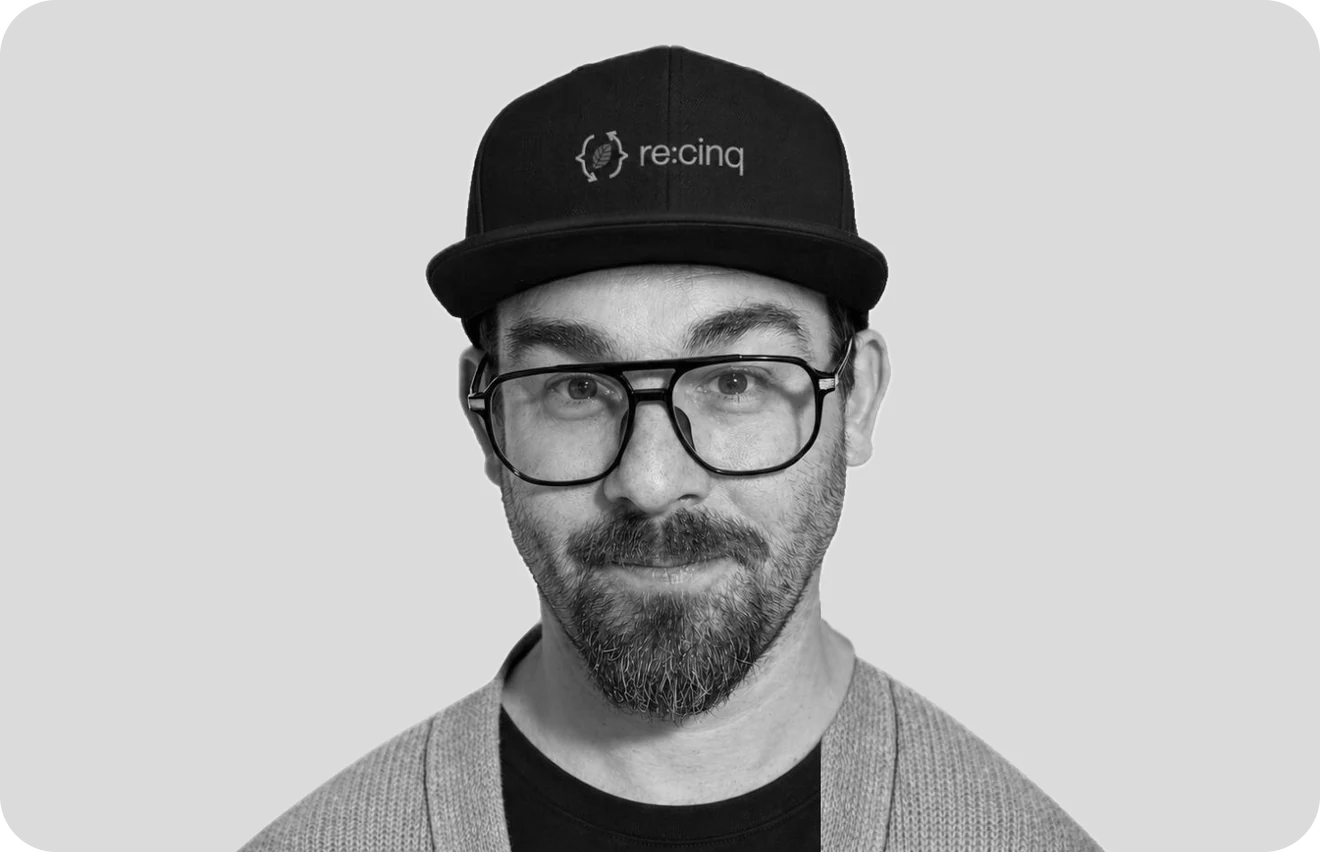
I'm Manuel Fuß. I joined re:cinq in November as a Senior AI Native Engineer, working on applied AI. Before that, I spent more than 15 years in e-commerce and B2B software, started an AI practice at a digital agency and worked as an independent consultant.
Learning AI alongside the day job#
Most of my software career has involved building things people use at work. In e-commerce and B2B software, that means paying attention to how someone actually does their job and whether the software helps them do it. I've carried that interest into my AI work.
I began studying AI alongside my day job in 2017. By the following year, I had trained my first neural networks and completed the Deep Learning Nanodegree at Udacity. Building and training models gave me a way to understand what was happening inside them. My work has since moved towards using models in applications, but that was where I started.
Who keeps track of the goal in a team of agents?#
In July 2024, I published an article about AI agents developing software together. I was interested in giving them different jobs, with some writing code and others reviewing it, much as people divide work within a development team.
Dividing the work raised a question I still ask about a multi-agent system: who checks that the combined result does what was originally requested? An agent can finish its assigned task without knowing whether the whole project is going in the right direction. Adding another agent does not automatically give anyone that responsibility. I wanted to understand how to keep the original goal in view while letting agents work on separate parts of it.
Turning my agent workflow into PULSE#
By 2025, I had developed a way of planning tasks for coding agents and reviewing what they produced. I turned it into PULSE, a framework other developers used in their own software projects. I wrote more than a hundred pages of guidance and exercises to explain the method.
The open-source tooling includes safeguards for when an agent is working on its own. After 30 minutes of autonomous work, it reaches a checkpoint. Before it pushes to Git, it needs confirmation. These are explicit points at which to stop and check the work, rather than letting the agent continue indefinitely.
Some of the instructions for particular tools are now out of date. I still use the planning and review approach: deciding what a task should cover before an agent begins, then checking whether a change is ready to ship. The tools have changed faster than those decisions have.
Building AI tools with the people who use them#
Before becoming independent, I was Head of AI at a digital agency, where I built up the AI practice. Consulting then gave me the chance to work directly with people who knew their business processes well. We would work through what they needed, decide which parts AI could handle and identify where they still needed to use their own judgement. I built the software myself.
I also began teaching AI and giving talks in 2024. As a consultant, I led AI hackathons in which teams built applications for their own departments. Many participants were used to writing requirements and waiting for engineers to turn them into software. During a hackathon, they could make a working version themselves and try it out.
That changed what they could discuss with the engineering team. With an application in front of them, they could point to something that was missing or did not work as they expected. They no longer had to explain the entire idea through a requirements document before anyone could try it. I found those conversations much easier to make specific.
Retiring my digital chief of staff#
In early 2026, while working independently, I built a digital chief of staff to help run my own work. It coordinated development across specialist agents as well as keeping track of my projects. If it needed a new tool, it could ask one agent to build it and another to review the code.
I kept those jobs separate deliberately. The agent that wrote a change could not also approve it. That is still how I approach approval, even though memory and scheduled tasks in my everyday tools eventually removed most of the need for my own system.
It also shapes how I think about a human in the loop. The person approving a change needs enough context to judge it, and the approval needs to be separate from the work of producing it. Otherwise, I have added an approval step without giving the reviewer what they need to make the decision.
Why I joined re:cinq#
I enjoyed the freedom of consulting, but I wanted to work as part of a team again. A mutual contact introduced me to re:cinq, and our early conversations quickly got into how we each work with agents.
I talked about the checks I use for AI-generated work and how I decide whether to approve a change. My future colleagues described how they deal with those questions during planning, while deciding which parts of a client project to give to agents. We were looking at some of the same problems from different points in the process.
I wanted more of those conversations. At re:cinq, I can contribute what I've learned from building these systems and work with people who have tried other approaches. I had missed being able to discuss that work regularly with colleagues, and it was a large part of my decision to join.
Family, games and side projects#
I'm married, with two children and a dog called Mogli. We spend a lot of time together as a family. Once the children are asleep, my wife and I like to play PlayStation together.
I also build things for fun, often involving AI. I'm particularly interested in AI safety. One of my side projects is AI Doomsday, a small game where you decide how much control to give an AI. So there is quite a bit of overlap between what I do at work and what I choose to do in my spare time.
If you're working with coding agents and want to talk about how you plan or review their work, I'd be happy to hear from you on LinkedIn. I'd also like to hear about any tools you've built and then retired because the products you use caught up.
Related articles#
- From the Interpreter to the Agent Fleet: Felix Harenbrock on the agent-based software factory he built before joining re:cinq.
- From Text-to-SQL to Software Factories: Saad Ahmed on checking answers that look correct, from data pipelines to coding agents.
- From Forecasting Models to Coding Agents: Sufyaan Jakate on his move from quantitative finance to agentic systems.
- From the Flight Deck to the Software Factory: Jasper on responsibility, checklists and what he brings from aviation to working with agents.