The Power of Cloud Native: A Beginner's Guide
Discover the benefits of cloud native technology revolutionizing software development—changing how we build, deploy, and operate applications.

 20 mins read
 10 Sept 2024
What is Cloud Native?
In today's fast-paced digital landscape, businesses are constantly looking for ways to stay ahead of the curve. One way to do this is by adopting cloud native technology. But what exactly is cloud native, and how can it benefit your organization?
What is Cloud Native?
Cloud native refers to the design and implementation of applications that are specifically built to take advantage of cloud computing principles and services. This approach enables businesses to create scalable, flexible, and highly available applications that can be easily deployed and managed in the cloud.
Benefits of Cloud Native
So, why should you care about cloud native? Here are just a few benefits:
- Increased scalability: Cloud native applications can scale up or down as needed, without the need for expensive hardware upgrades.
- Improved flexibility: Cloud native applications can be easily deployed on a variety of cloud platforms, giving businesses the freedom to choose the best platform for their needs.
- Enhanced reliability: Cloud native applications are designed to be highly available, with built-in redundancy and failover capabilities.
- Reduced costs: Cloud native applications can help businesses reduce their infrastructure costs, by only paying for the resources they need.
Key Characteristics of Cloud Native Applications
So, what makes a cloud native application? Here are some key characteristics:
- Microservices architecture: Cloud native applications are built using a microservices architecture, where each service is designed to be independent and scalable.
- Containerization: Cloud native applications use containerization, such as Docker, to package and deploy applications.
- Serverless computing: Cloud native applications often use serverless computing, such as AWS Lambda, to reduce the need for server management.
- DevOps practices: Cloud native applications rely on DevOps practices, such as continuous integration and continuous delivery, to ensure smooth and efficient deployment.
How Cloud Native is Revolutionising Software Development
Cloud native is revolutionising the way we build and deploy applications. By taking advantage of cloud computing principles and services, businesses can create applications that are more scalable, flexible, and reliable. This approach is also enabling businesses to reduce their infrastructure costs and improve their time-to-market.
Cloud Native as the Foundation for AI Native
A few years on from when most enterprises adopted these patterns, the same Cloud Native architecture is what now makes AI Native possible. We've seen this consistently: teams that did the Cloud Native work properly bring on AI workloads in weeks, while teams that left the foundations half-built end up reinventing scheduling, scaling, and observability before they can responsibly start.
What we've found in practice:
- Containerised, declarative infrastructure is the substrate for agentic systems. AI agents and model-serving workloads run on the same Kubernetes patterns that ship product code. Operating Kubernetes confidently is the difference between an AI Native rollout that lands in weeks and one that stalls during architecture review.
- CI/CD discipline carries over to evaluations. The same pipelines that test and deploy code are where prompt evaluations, agent regression tests, and model gating live. Without an automated delivery pipeline, you cannot responsibly ship AI components at all.
- Observability requirements multiply. Logs, metrics, and traces were already non-negotiable for cloud-native applications. AI workloads add token usage, model latency, prompt and response payloads, and evaluation scores on top of that.
For organisations starting the AI Native transition today, the practical work is to audit which parts of the Cloud Native foundation are solid enough to support the next wave, and where the gaps need closing before AI components can land in production. The Cloud Native investment is also the foundation every responsible AI rollout depends on, which is why this work is worth doing carefully the first time round.
Your next read
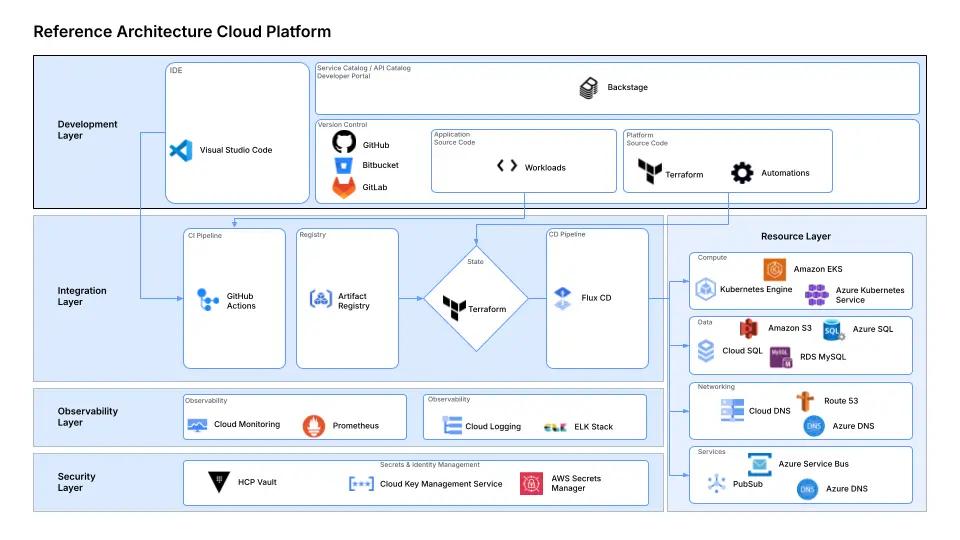
Platform Engineering Reference Architecture
Build scalable platforms with Platform Engineering Reference Architecture. Empower developers and accelerate software delivery beyond cloud native.
Michael Mueller20 mins read
Subscribe to Our Bi-Weekly AI Native Newsletter
Lessons from our client work, engineering deep-dives, and the AI Native research worth reading.
Bi-weekly. No spam, unsubscribe anytime.
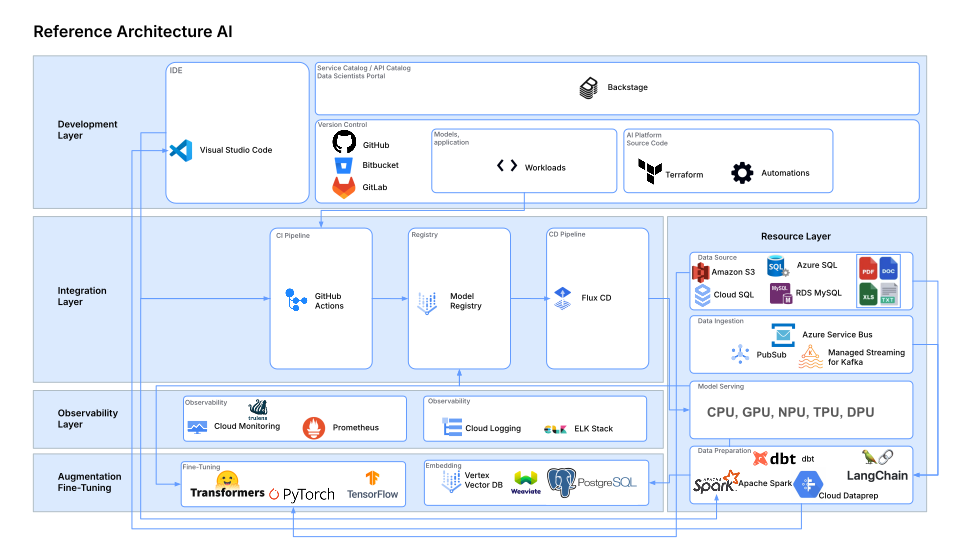
 20mins