
Get the Complete AI Native Guide: From Cloud Native to AI Native

Get the Book

Podcast

Dec 05, 2025

From Tech Stacks to Mindsets: The Psychology of Transformation

00:00

From Tech Stacks to Mindsets: The Psychology of Transformation

organizational change

tech psychology

ai adoption

liberating structures

leadership strategy

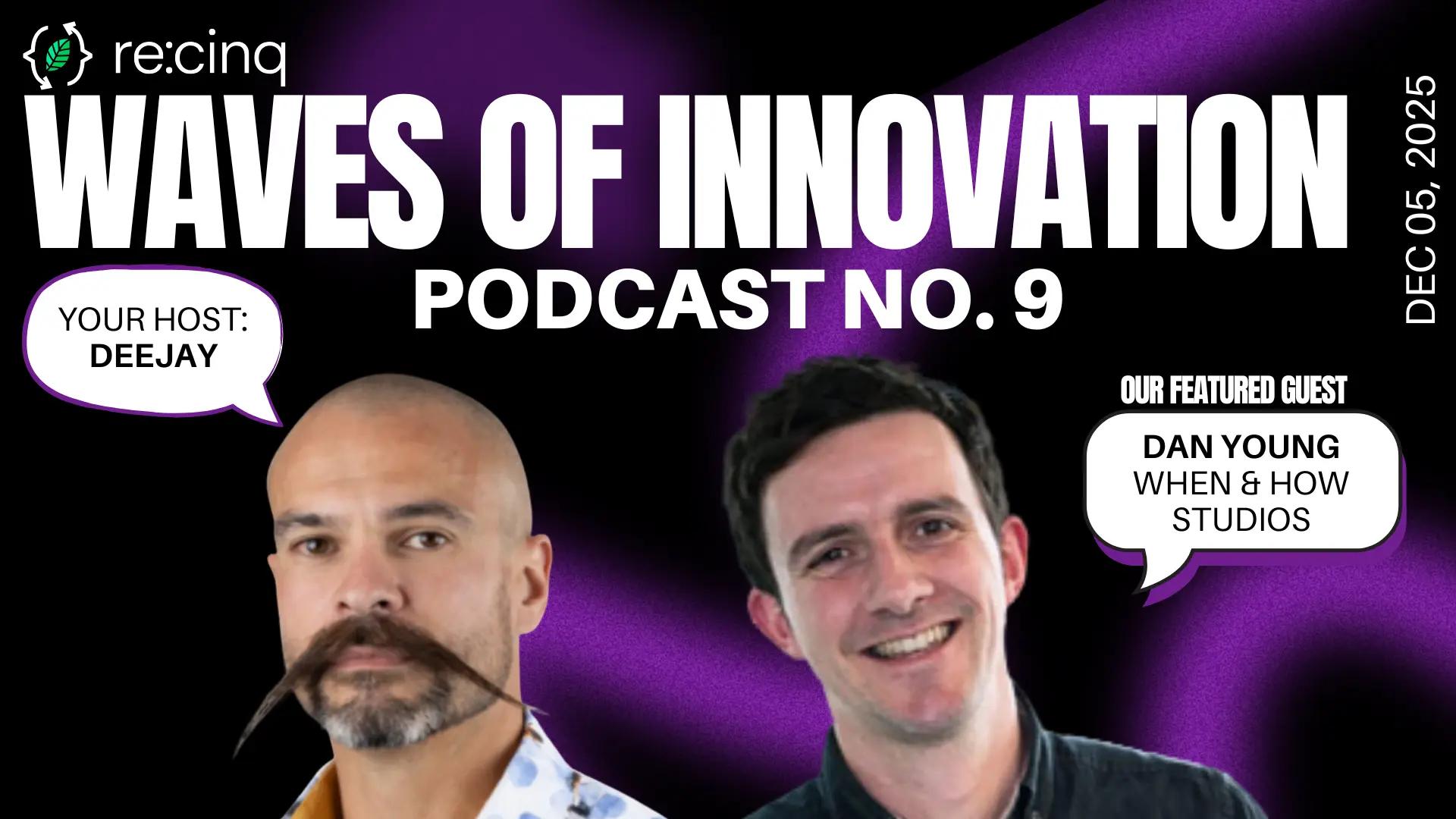
Host Daniel Jones reconnects with former business partner Dan Young to discuss the critical human element often missing in digital transformations. Reflecting on their journey from Cloud Native consulting to organizational psychology, they explore why technical mandates fail and how professional identity impacts the adoption of AI. The conversation covers practical strategies like Liberating Structures, invitation-based change, and the power of listening to navigate complex power dynamics and build effective, resilient teams.

Hosted by

Deejay

Featuring

Dan Young

Guest Role & Company

Co-Founder @ When & How Studios

Guest Socials

Episode Transcript

Daniel Jones (00:00) You are listening to the Waves of Innovation podcast. am DJ, your host, and I am going to be talking to Dan Young, my ex-colleague and old friend. We used to run a cloud native transformation consultancy together. Dan taught me loads of things about helping people adopt new technologies and adapt to change from a very kind of psychological perspective. So thinking about people's motivations, their identities, the power dynamics in the room. So if you are in an organization and you are adopting new technologies like AI, for instance, then a lot of the things that Dan explains will be absolutely relevant in terms of getting people on board and making sure that their voices are heard. So thinking about listening to people and making sure their voices are heard. Sit back, listen to the episode and enjoy. Daniel Jones (00:48) So Mr. Daniel Young, it's nice to catch up with you. We used to run a business together 10 years ago and we had grand aspirations. Would you like to tell the listeners a little bit about like what the heck we thought we were doing and then maybe what we actually ended up doing? Because it was all very transformative or at least we wanted it to be in the very early days. Dan Young (01:08) Yeah, well I think we put, I've told a couple of people about this over the years, we put transformation on our rate card, on our description of our services, but we didn't really know really how that was gonna work. We kind of had all these high-minded ideas from all the books we'd read and all the ideas that we'd developed in various organizations didn't we about things could be so much better. And if only this were true and if only that were true. So we kind of wanted to sort of roll that out along with a technology capability. was, you we were, we were trying to, we were trying to get organizations to implement platforms better. And this was way before Kubernetes was even really a thing, right? Because with, with Cloud Foundry, but the, the, the, the method of doing that was, while you're building platforms, why don't you try doing it in this way? Cause it's really effective. and you could do this with actually any type of software. that was kind of it. as we kept working together, we broadened our horizons away from just the software team itself into other parts of the business. The more leaders we spoke to and the more we saw of the clients, we started to realize how important it was to get a grasp on how people came together at a bigger scale across multiple teams or department level and how decisions were made and how money was allocated and how incentives were structured and all that kind of stuff. by the time we parted ways after, what was it, five years, was it? For a good few years, wasn't it? were, yeah, but yeah, we'd... Daniel Jones (02:40) Seems like longer, not in a bad way. ⁓ Dan Young (02:43) developed a whole bunch of new ideas and theories of change, I guess, in that space as well. So that was it. Daniel Jones (02:49) Yeah, and I mean, so we originally got the band together in around about 2016, April 2016, I think. And it was an interesting time in terms of, like you mentioned, the Kubernetes wasn't really a thing. I mean, it probably was, but it hadn't hit the mainstream yet. So we were working with an opinionated platform as a service and all of that platform engineering stuff and being able to greatly accelerate the path that software takes once it's been written. Dan Young (02:57) Yep. Daniel Jones (03:17) then out into production, kind of presented a step change. And there was a lot of optimism about this, maybe being able to disrupt the way the work is done. you know, I promised you I wouldn't bang on about AI too much, but, you know, it is sort of what I now do for a living and what Resync does. There are parallels there in that, like, new technology has the potential to disrupt things. But this was, you know, 2015, 2016, when people like Uber were disrupting the world. biggest transportation company with no vehicles and Airbnb, the biggest hospitality company with no property. That was before TESSLa went crazy and started doing all sorts of weird, questionable things. They were disrupting manufacturing left, right and center. I remember there being a kind of buzz around startups coming to eat your lunch. It was exciting because enterprises were receptive. Dan Young (04:05) Hmm. Daniel Jones (04:08) to the message of changing the ways that they worked and the way they delivered software in particular. Dan Young (04:13) Yeah. Well, that, that, I guess the, that, that way, the change was cloud, right? And the buzzword was cloud native. So it was the cost of the cost of change on the infrastructure side and the provisioning side had dropped. you could, those, those barriers weren't there anymore. So then the, the focus, the spotlight of focus changed towards the, the methodology in the software development lifecycle. And how do you, How do you have a team that can work in a way that has a very low cost of change? So small batch sizes where you're isolating the cause and effect. the highly opinionated way that we used to work promoted that, didn't it? As some listeners will be familiar with, extreme programming and what... was the inspiration behind the pivotal method, which we were heavily influenced by that all contributed. There's a sort of interlocking practices that made all of that effective working style possible. Daniel Jones (05:14) Yeah, like there were, the technology had progressed to a point where the cloud platforms were a thing rather than people just, you know, spinning things up in EC2, like in, you know, kind of 2010 when I first started getting involved in cloud tech. So the platforms were a thing with a lot of convention over configuration. So you could just push code and what was the old thing? Was it Onzee's Haiku? Here's my code, run it for the cloud. Here is my code. Dan Young (05:26) Hmm. Daniel Jones (05:42) run it in the cloud for me, I do not care how. That was the mantra of that kind of movement. And so there was this technological enabler, but methodologically, you could go in and you could install this for people and they wouldn't be using it right. I can't remember which of us came up with this, but I remember certainly repeating it of giving people an effective cloud platform is a bit like. giving somebody who's only ever ridden a horse a sports car and they get in the front seat and just shout giddy up and don't go anywhere. So there needed to be this kind of methodological change to go with it. I'm going to say this now because otherwise I won't remember to come back to it. But something I was just thinking is the cloud platform that we were advocating was kind of batteries included. know, it was more or less opinionated. All the bits went together. The Kubernetes movement ended up winning out for all sorts of very valid technical reasons. I wonder if the difference there is like we were giving people sports cars that allowed them to go very fast, whereas the Kubernetes folks were like building a kit car. You know, or one like they've been on the journey of building the thing rather than it being this sudden like, wham, you know, purchase order. Now you can go really fast, but yeah, I don't know whether that's the difference. But yes, the methodological change, I think was the important part. And, you know, I think, I don't know how you felt about it, but the frustration of we had people that were now technologically capable of going quickly, but they were just doing the wrong things in air quotes. Dan Young (06:42) Right. Yeah. Mm-hmm. Yeah, there's something in that kit car metaphor because I feel like there's something in it's interesting that, you know, a Heroku style platform should have been what everybody wanted, but really because because of fashions in the technology stack and the industry and recruitment around it and people's needs in that actually building kit cars was more Building kit cars was more exciting to people than using fast cars. Right. They just wanted to build the cars. didn't want to use them that much. then keep it up. Daniel Jones (07:41) You used to have a metaphor about like Lego or something or like Tweetrain sets because I had to give a talk on your behalf because you were ill and this was in really early days of the company. I gave it, think Yahoo! who even in 2016, I think were, you know, ⁓ of diminishing relevance. But there was a meetup at Yahoo! and I remember giving a talk with some slides you presented about people wanting to kind of create their own little... model train set and make it exactly how they want rather than, you know, just using abstractions that other people have created. Dan Young (08:09) Yeah. Yeah, that's right. So where, so you go first. Daniel Jones (08:14) But yeah, so I was going to say this is something that either Yonatan our editor is going to have to deal with or the poor listeners of you and I speaking over the top of each other because we know each other so well. Yeah. So the methodological change and the kind of habits that we wanted to see people shift, you know, to put those in concrete terms, we were coming from a place where we've been heavily influenced by Dan mentioned the pivotal methodology, which is hardcore extreme programming, know, kind of eight hours a day pairing all the time, unless you're writing documentation or, you know, kind of working on a spike or something like that. And pretty strict continuous delivery as well. So, know, trunk based development, every commit should be ready to go to go to production. And when we encounter people, I say when we encounter people that weren't working that way, it's frustrating having experienced that and how little nonsense there was in it, how effective a team could be. Certainly for me, it was hugely frustrating going to other places and being like, ⁓ God, what are you doing? What is this Jira board? How have you got these stack ranked and they've got different priorities at the same time? That's not how Kanban works. It was hugely frustrating that we'd kind of seen the light on this front. Not, I think maybe there was a period where we thought it was the right tool for every job, but certainly it was better than a lot of what other people were doing and just kind of wanted to share that more effective way of working. Dan Young (09:42) Yeah, and I... it's... for the entire time that we did run a business together, we spent a lot of time... sort of with, you know, pitching that set of practices that made up XP against the more individualistic methodologies. And I would say that that's what I noticed. It wasn't until we finished working together, I looked back at still this burning heat around the kind of the issue of like trunk based development versus branch workflows, you know, and pull the best workflows like that just is such a hot button topic as he's pairing. Like people are like just absolutely wild sometimes if you even suggest that they would pair and other people are like, how could you not pair? And, ⁓ what I know, what I finally realized was, think it's got nothing to do with whether these things work or they don't work. Right. If it works, it's because your values align with that. So if you're, if you worked in pivotal and you left pivotal and you're bereft and you're mourning the loss of pivotal. or anything like that is because you've got this collective mindset, like all these things like Trump-based development and pairing, they're about doing things that are good for the group and not just working on your own. Like, I'm gonna put my headphones on, I'm go over here, I'm gonna get on my branch and see you all later on. Like that is the kind of, I think Jez Humble said this once, back in the days when we could actually use Twitter, he said something like, there's a mythology around... The reason it strikes at the mythology of what a good developer is to do things in that way and to reject Trump based development pairings. So it's not possible is because it doesn't align with your core values of like what a good developer is. It's like you're a lone wolf. You know, that's, that's the kind of ⁓ theory of it. So, and I think that's what it is. That's why it's so difficult to internalize, but yeah, it's true. If once you've seen it working, you can't never go back. can't say, It just does take a value shift. ⁓ Daniel Jones (11:35) Yeah, and I think one of the things I've always appreciated about your insight and more so over the years since we worked together, of having noticed it, maybe taking it for granted at the time, is thinking about things like people's individual values and their psychological motivations for things. Why it's not just as easy as telling people, hey, go and do a thing, like we've got a new technology, we've got a new methodology, just do what you're told. Those kind of changes. don't tend to work out well and trying to get to the heart of what it means for people's identity to be changing habits, changing the way that they're developing software. mean, for the listeners who are more interested in AI, whilst we're prattling on about 10 year old cloud platforms, you know, I think there are a lot of parallels there of asking somebody to you know, the way that they deliver software to be different is it's that's going to be peanuts compared to not writing the software and asking, you know, an AI to do it. So, yeah, that kind of understanding what it is about people's identities, what they value about their job, what motivates them intrinsically, rather than just like, you know, hey, here's a word document that says what you should do now, go and do it. And being surprised when that doesn't turn out very well. Dan Young (12:41) Hmm. Right. Yeah. mean, the last time we spoke, were, because you're a lot, I'm doing a lot of coaching work, but you're closer to code writing day to day. So you're in these dangerously modern workflows that involve AI. so you're experiencing that yourself and you're working with organizations that are also coming to terms with it. And engineers are, you know, they're in Claude and they're doing all their stuff. Daniel Jones (13:02) You Dan Young (13:15) What is it that is now, what are the headlines in terms of the biggest shifts? mean, the one that I remember you talking about was how roles shifts, engineers become more like coordinators or managers, if not product managers, and product managers can vibe code something, so they start to shift more towards engineering potentially. So that the old boundaries are starting to become a bit blurry and that could impact things. Daniel Jones (13:43) Yeah, yeah, that's definitely one of the things that's happening is, you know, the developer workflow having the potential, not necessarily, but to shift left into the product sphere. And exactly as you described the product kind of workflow to shift right into actual implementation. So those are things that are happening in some places and it's going to be super interesting. Cause like one of the things that I find interesting about this and also with some of the other works that you've done, which we should get onto in a moment is that It's no, there was a point where AI coding assistance was about just the roles and responsibilities being the same, but now you can go faster. But the idea of changing the like the boxes and like redrawing the boxes on the org chart, that is where we get into fascinating territory. So like, as you described, that's definitely a thing that's happening. Another, I mean, there's kind of a few phases that I think people go through. There's a a population of developers who are, there's a population of developers who are fearful. And you know, this is like all that identity stuff we talked about previously, like I enjoy writing code. It's what I'm good at. It makes me feel good. That's how I present myself to the world as an effective coder. And you want me to give control of that to a machine. You get people getting that kind of wave of resistance. There's then normally disillusionment. of people will have seen a demo of like, we were doing this in a training course that I'm writing yesterday. Yeah, it was yesterday of like create a Flappy Bird clone. And, you know, two minutes later, an AI agent's done that like from beginning to end. And people are like, wow, it can do quite impressive stuff. And then you get it to do something very specific and they suck at those kinds of tasks, or at least they need a lot of support. So people then get into a disillusionment and then there's all the kind of normal Dan Young (15:20) Hmm. Daniel Jones (15:31) organizational change challenges that happen thereafter. On the subject of some of the other work that you've done. So maybe if we take this through the lens of our old company, engineer better, you mentioned earlier, you know, we started with cloud platforms. We realized that they would enable people to go faster, but there were organizational blockers to that. And I think one of the landmark kind of customers was ⁓ Dan Young (15:55) Hmm. Daniel Jones (15:56) Should we name names? I mean, it's all in the distant past and the company doesn't belong to us anymore. Dan Young (16:00) You could name the industry and the size of the business. Daniel Jones (16:04) So for a satellite television company that's very popular in the UK, now wanted to help us with their TV division. they had problems with the CI CD server and which we were specialists in and they thought their problem was technological. We went in and had a look at what they were doing. And I think I did that initial gig and then kind of came back to you. was like, dad, dad, it's not tech that this problem. And you pitched some really for us groundbreaking work, which I think was probably inspired by some of the stuff that you'd done with Simon Copsey, who is another awesome consultant that everybody should look up on LinkedIn. And you kind of dug quite a lot deeper on that engagement to find out more about how that software delivery practice worked. Dan Young (16:48) Yeah, I'm trying to remember if that was, I don't know if that was the sequence, it was sounds for like, I think there's a few different customers that were similar to that, where we were sort of getting away from just how do you make the team more effective to how does everything else. See. think the sort of theme in a few of those customers, including the one you're talking about was how... certain roles and identities, you may need to shift or people need to be prepared for them to change. And it's engaging with those with those people to just find out if they're up for it or not. And then if you can sort of gauge that and sort of either work their way through it, and they come out of the side going, yeah, actually, I can let go of that identity. don't actually need that anymore because I can hold on something. I can see a new path for myself. can create a new future for myself. And I think when we were working together, those sorts of things were roles like testers or QA and maybe even some architects where it's like kind of the, the, the, the, the, the life cycle that we promoted maybe didn't have those roles in it in quite the same way. and both while we were working together and then afterwards in gigs that I did after it was a process like a process of working with groups of people like that to to find out what it is that they believed about themselves like and almost like a of myth myth surfacing axiom where you find you find out what what are the myths that you're basing your your role on and are you willing to name them as such and would you be willing to get rid of them? I think that's yeah, that's kind of the gist of it. Daniel Jones (18:27) I maybe you're right, I might be conflating a few different gigs and looking back, I think there were probably two really important things that you did in the transformation work that we had. One was the trying to understand organizations. And I remember you working with Simon and current reality trees and applying systems thinking to stuff. So there was an element of looking at how the software delivery practice in an organization really works and not just looking at like Dan Young (18:45) Hmm. Mm-hmm. Daniel Jones (18:55) you know, people see ICD pipelines, why do like culturally, why do people believe this? Why do people not write tests? Like what are the causes of that? Who said what, when, which architect thinks that the unit tests are a bad idea, you know, kind of really digging into that and understanding things as a system. And then I think the other kind of really important thread was one having the emotional intelligence and curiosity to realize that in order to get people to be honest and to get not honest, that's not the right word, but like to get people to be frank and open, you need to communicate with them in better ways. And so kind of creating different formats for people to share ideas and ideas for improvements. ⁓ Those were quite important, I think. Dan Young (19:33) Yeah. Mm-hmm. Yeah. Yeah, and I don't know if I quite tweaked to invitation based change, like a theory of change based on invitation, which is quite, it crops up in all kinds of things, but I guess one of the most famous ones is open space. it's the notion that there's no obligation to come to this gathering. Right, you can just turn up if you want to. If you've got something better to do, should go and do that better thing. But if you want to come, then this is the rules of the game. And once you're in the open space, then you know for sure that everybody who's there really wants to be there. And there's something very powerful about that. So I think when we were working together, I sort of started to notice that, but I didn't really put it into practice till later. it's still, I think, the most... long term it's the most powerful thing because people are choosing for themselves to do something differently and you ask your you've got this mechanism through invitation based work the opt-in version of a meeting to say I know for sure that these people are up for it and they're the ones who care enough they've got the capacity to change and they're willing to do it right now and the other people who didn't turn up it's not the right time for them The downside is that it feels like you're moving very slowly. the point is, even if you've got five people who turn up who actually care, you've got the beginnings of something rather than just a hundred people who actually cares. Daniel Jones (20:55) Yeah, you've got five. Yeah, instead of herding 500 cats, you've got a handful of people, of a the numbers of people increased there when it turned into cats, but you've got people that are already committed and need not less steering, but you don't need to convince them because they self-selected. Just for, I need to work on my working memory, but we mentioned open space. So just for folks that aren't familiar with that, that's a... Dan Young (21:00) Yeah. Yeah. Daniel Jones (21:18) format for ⁓ meetings and unconferences where it's basically self-organizing. You turn up, if you want to turn up, people nominate their own topics. You talk until the topic's over. If you're not interested in a topic, you move on. You take responsibility for your own participation. So if you've ever been to an unconference, you've probably ⁓ seen one of those. And then on the invitation front, I remember getting on your nerves at least once by talking about buy-in. to use that phrase, like the, you invite somebody to take a part of change or, you know, meetings that precede change, you've kind of got their buy-in early because they've self-selected, because they've gone, is a topic that I'm interested in and I'm engaged in. And therefore they're already kind of committed and maybe not aligned, but like they're at least engaged. Whereas when you try, get a load of people and tell them what's going to happen. then, you know, six months later you want their buying. It's a, you were kind of, it's an uphill battle at that point. Dan Young (22:16) Yeah, yeah, no, absolutely. I'm trying to think what else was really, while we were working together, what those key methods to support change were. And as you say, it would apply then when we were dealing with 10 year old cloud platforms and it applies now when people's roles and identities and working patterns are shifting around AI workflows. I think beyond that opt in, nature of getting people together to really find the people who care. The other thing is changing the organizational physics of the space you're in using structure. So we used to use liberating structures and I know that you still do, right? So there's a few that you have in your kit bag to sort of provoke people or to shake up the room a bit. And the thing that shows up in all of those and you can use it in really simple ways is simply changing the way that people participate to neutralize the dominant power dynamics. So you're controlling who speaks and when they speak. So if you say everybody has a couple of minutes each to say what they think about this topic and then you go around in an order or you get somebody to nominate the next person and normally that's not how it works. Participation is just completely unstructured and anybody can speak for as long as they want and say whatever they want and then they just consume all the time and the quieter voices are going to stay quiet. just that simple thing is is probably one of the most powerful because you can do it in any space. You can do it in a stand up. You can do it in any meeting. You can do it on the spot. Daniel Jones (23:37) Yeah. Yeah. so liberating structures for folks that aren't aware of it. It's a book and a website, think liberatingstructures.org. And it's kind of like a menu of about 30 different, not quite meeting formats, but like ways of structuring a conversation that you, and they all have different uses and kind of get different results so you can use them in different scenarios. But like you say, they shift those power dynamics and kind of stop, they reduce the chances of kind of one way unilateral communication or they reduce the impact of the hippo, the highest paid person in the room. And when you free up people and especially allow the quieter voices to speak, that's often when you get stuff that's taboo. And that's like when we were working with customers, I always found that that was the bit where the real interesting insights came. When people said what they thought was unsayable or what they were anxious about saying in front of their boss, it's like, ⁓ okay, now we're getting to something. It's because, you know, the chief architects didn't believe in unit tests or because, you know, the CTO was friends with the CEO and got the job by playing golf or something. You know, it's those kinds of things where you all of a sudden got a better understanding of dynamics that then showed the rest of the organization in a totally different light. Dan Young (24:56) Mm-hmm. Mm-hmm. Yeah, no, yeah. It just reminded me of the one, the all-time classic role that we uncovered where there was a slightly detrimental incentive, which was that an operations engineer was getting paid way more than their basic salary in overtime to click next on manual updates on the weekend. And surprise, surprise, they didn't really like the idea of automation. and didn't really want a platform that deployed itself in a pipeline. Daniel Jones (25:28) No, no, strange that, isn't it? Like, you know, we could have automated it and then, you know, just run a command and it does itself in a couple of days or, you know, and bearing in mind this is hundreds if not thousands of VMs or this individual could spend the next six months working overtime and get more than their salary in overtime payments. Strange that, isn't it? Yeah, it reminds me of incentives is a difficult and tricky one. And again, like... Dan Young (25:36) Yeah. Yeah. Daniel Jones (25:52) So ⁓ the example I was just thinking of is at a betting platform company that underpins a lot of the kind of betting brands in the UK. And their testers were paid by the number of passing tests that they had. So they had absolutely no incentive to find any bugs or to write any tests that might find any bugs. And ⁓ unsurprisingly, their stability was really terrible. And things like incentivization, it's I think it's still persisting frustration to me at the moment of like, why is most of the world so bad at this stuff in the first place? And I wonder if this kind of gets dangerously into maybe politics, but like all of the thing, you we mentioned power dynamics and being sensitive and aware of that and talking about psychology and people's motivations and sense of identity. And I worry that A lot of people like write that off as hippie bollocks. We can swear on this podcast by the way, but you know, hippie nonsense for our international listeners that maybe don't speak the British vernacular. And so don't have the curiosity to at least consider it. And I know some really like gung-ho bravado filled fiery engineering managers and directors. who can be very forceful, but at the same time, they have an awareness of these kinds of things and of identity, psychology, people's values, and the power dynamics in a room. Why aren't people more aware of this? Maybe I'm being unfair. In your experience, and especially the work that you've done since, have you found that people are completely ignorant of these kinds of topics and Dan Young (27:24) Hmm. Daniel Jones (27:29) Or do they not feel able to explore them? Is it something they've never even considered? Dan Young (27:33) Um, so some of it is, it's not fashionable, I think, to, if you just get to like group work in general, and this is something that, that I reflected on a lot with, with Mike Wazinski. uh, collaborator, um, Mike, who I've worked with for a few years, we set up when, when in-house studios as a joint venture to, to, to, to get the work on, uh, coaching and helping, um, organizations and individuals with their, um, with the way that they approach. intentional group work. So one of the things that we talk about is, is this issue of, of how the organizational life, what is it that's stopping more relational work being part of the what's normal? And it can be, how are people getting relating to each other? How are they actually sharing their thoughts and feelings in the day to day of their work and actually connecting with each other and humanizing each other as groups. And it can be about power. So, you know, that vertical difference, power differences that exist across the vertical dimension of an organization. That is itself kind of a taboo topic. And there's a kind of devil's bargain. Is that the right Faustian bargain between workers and their employee, their employers and their managers and the bosses of the bosses, which is, we'll pretend to know what we're doing and you, you just get on with what we tell you to do. And on the flip side of that, when you get people who are in the workforce together and they look up to the top of the triangle, they're like going, please give me some, just give me certainty. Just tell me you've got a plan. You do have a plan, right? You've got, you know what you're doing, but they're just winging it at the top as well. So, but there's, everyone wants to pretend that's not the case. And it would be unthinkable for somebody with high level of power at the top of organization to admit that they're just as scared and vulnerable and worried about all the same things as their workers are. You they want to belong in their peer group. They want to feel safe in their roles and they want to feel competent and they want everyone to think about those things. And, but they don't want to ever have to admit that they're that's shaky on shaky ground so yeah Daniel Jones (29:41) It's fun listening to you talk. All of a sudden all the organizational transformation sales pitches are coming back into my head and all the metaphors we made, because as you were saying that about the unwillingness to be vulnerable, or maybe unwillingness is unfair, like that's an uncharitable take, but the impossibility or the challenges of being vulnerable when in a leadership position. ⁓ You used to frame that as the iron triangle of, well, not Dan Young (29:51) Yeah. Yeah. Daniel Jones (30:08) quite the iron triangle, but it leads to, we were big on root causes and that if you don't change the root cause of problem, then you're not gonna get very far with it. to contextualize this more, we're talking about, or often we were talking about software delivery practices. It could be adopting a cloud platform, it could be these days, adopting AI in one way, shape or form. But what we often found was that that was difficult because people had the wrong incentives and the organization had the wrong structure. Why for those practices and changing them was very difficult. Why did they have those? If you trace it all the way back, it kind of comes to leadership who are struggling with demonstrating vulnerability. And so instead get locked into the iron triangle, which if I can remember this right, was, you know, what exactly am I going to get? When exactly am I going to get it? And how much is it going to cost? And so Dan Young (30:56) yeah. Yeah. Daniel Jones (30:57) driving people, those three questions drove people in certain patterns of behaviour and that need for certainty so they didn't have to be vulnerable. Whereas, can you remember what they should have been asking or at least what we encouraged them to ask? Dan Young (31:11) I'm going to go back and watch the video we made to try and promote us. Daniel Jones (31:15) Yeah, so we were instead encouraging people to instead of how much are going to cost, how much am going to make? So thinking about opportunity and kind of prioritizing things by cost of delay. Dan Young (31:25) what's it worth? guess it's like not how much it costs. What's it worth to do this? Yeah. Daniel Jones (31:29) Yeah. And instead of what am I going to get? How is it going to change the world? Like what's the impact it's going to have? So instead of focusing on the requirements, do you remember when we went to see those folks from the UK bank that had been significantly bailed out by the UK government? And we asked them, how do you know if a project's been successful? Well, if it came in on budget and on time. Okay, fair enough. And how do know if you built the right thing? Looked at each other. Bearing in mind, we were there in t-shirts and they were there in suits and they were looking at each other and saying, well, there would have been a requirements document. So, you know, if the requirements had been met. Okay. How do you know if the requirements were asking for the right thing and with, you know, therefore you built the right solution. And I'm like, oh, we've never really thought of that. These are people that are in charge of IT for some massive bank and had been for decades. Yeah, that kind of thinking, it just... doesn't seem to be present in enough places. And maybe that's why startups can be in some instances more effective because they're more comfortable with the vulnerability and the uncertainty. Dan Young (32:29) Possibly. Yeah, I wonder where the best examples of that are, if there's leadership who can sort of dance with the power dynamic of, yeah, I ultimately have control over things here, but also I don't. So I don't know what it is. Maybe it's more like a cooperative sort of arrangement or self-managing structures. mean, there's certainly... if you know, from Frederick Lalu's work in self-organizing groups, structures, there's, you know, there's any number of smallish examples, know, where companies have sort of organizations of sort of Dunbar size, Dunbar this number, which is a maximum of 150 people you can hold in your... Daniel Jones (33:07) structures. Dan Young (33:23) your field of understanding. Daniel Jones (33:26) long gone are the days that I had to even understand 150 people. I remember back in an ecosystem, knowing hundreds of people by first name at conferences now after five years of working from home and the pandemic and, you know, kind of a career break after, you know, then I probably speak to 10 people on a regular basis, if that, ⁓ and, you know, I live in a house with most of them. Just Dan Young (33:45) Hmm. Daniel Jones (33:48) thinking about some of the things that we're talking about in terms of liberating structures, surfacing information and novel insights, allowing people to be vulnerable and understanding a system better. The work that we did for a company that we shan't name, not because they still exist, they got shut down in rather spectacular fashion, which had nothing to do with us. We weren't allowed to go and talk to the CEO. But let's say they were a type of sports betting company. The workshop that we did there was, I thought it was quite useful and those are techniques that I still use today. Do you remember what we did? And can you rattle that off on the benefits of it or should I take us through it? Dan Young (34:25) Why don't you remind me the sequence that we used and I will add some colour to it. I'll try remember. Daniel Jones (34:31) So, I mean, the fun part about this is this was all Dan's work. This was nothing to do with me. I just turned up and shouted loudly, which is pretty much all I'm useful for. But we were asked by a customer to help them with an internal kickoff. So there was a new CTO and he asked us to like hold up a mirror to the organization. And he was like, I need to know how it actually works. People were telling me things. I've got a copy of the org chart and you know, the Wiki that's out of date, but I need to know what's actually happening here so I can understand it as quickly as possible. Dan Young (34:35) Ha ha ha Daniel Jones (35:00) So we went in and he had changes in mind as well, that, things he wanted to try and kind of become a more tech first company rather than a finance first company. And so at a big kind of internal conference, they got all of the developers who had been working remotely around Europe together. And Dan used a couple of the liberating structures. So we used TRIZ and 124ALL in group setting. to try and find out what was going on in the organization. Do wanna quickly like run people through what TRIISM124 all are? Dan Young (35:35) So they're both pretty popular liberating structures and one two four all is a very foundational one in the in the menu and It allows kind of layering and building effects with collective thinking so It uses a technique right at the beginning where which I I'd still use even in isolation because I think it's very powerful is just Just think on your own for a minute about this question and you can inject any question into it. And one of the things that we almost never ever happens in any meeting you ever go to is just thinking quietly before you speak. Right? What do you even want to say? Yeah. Daniel Jones (36:10) something that never happens in my life. That doesn't happen in my life at all thinking before I speak. That was a novel idea to me. So yeah, so you invite people to think about a question for 60 seconds on their own and then ⁓ Dan Young (36:15) Yeah. Yeah, right. And then they compare up. So that the ongoing joke about 124, if you can count, you can do it. You can count to four, you can do the thing. So you get, you get two minutes, but to impair people to compare what you wrote down. And you can, you can see all to be right the same thing. Are they wildly different things? You know, what's going on here? And then you pair up, you've got combine the pairs into fours and you do four minutes with four people and you go here, what have you got? What have you got? And so you're sort of, everyone in the room is doing this in their twos and their fours and it's sort of parallel processing and you're filtering out the answers that people have got to the question. And then finally, when you go to the all part of the activity, you're saying, okay, let's just hear from each group. Let's hear just. just a few highlights of what stood out in the conversation you just had, know, from the ideas you've harvested and you've all compared. And by the time somebody's going, yeah, I'll speak and they're saying something to the whole room, you're just hearing the sort of distilled and filtered versions of whatever has surfaced and bowled up to the top is probably the kind of trend. It's the most important thing, the thing you should be paying attention to. And it's easy to process. You know, when you've just got groups of four and one person from each group speaks. So yeah, it's really popular. It's probably the one that most people know and have used before. ⁓ Entries, sorry. Daniel Jones (37:47) And well, just before we go on to TRIZ, so with the one, two, four, all, you know, we did this, that particular instance, we'll think about a hundred people if memory serves me correctly, but some of the benefits are by having that one, as Dan mentioned, you've got that kind of ⁓ 60 seconds of reflection. So idiots like me don't just start talking without having to think first, but by breaking people up into these smaller units, if you do have a couple of dominant voices, their blast radius is greatly reduced. Like they can only really impact the people that they're paired up with rather than the whole room. You also get, and this is something that we did at that workshop, was by getting people to pair up and go into fours with folks that they didn't necessarily work with day to day and from other departments. There was all of a sudden a humanization of other departments where they've been throwing work over the fence previously and kind of grumbling about each other on, you know, ServiceNow tickets or on Slack. they were confronting each other. don't know, confronting is not the right word, they were face to face with each other, talking to each other about their problems. And you you can't just, it's much harder to be narky and snide about people when they're laying out in front of you face to face what their issues are. So those were two of the kind of, ⁓ as well as surfacing lots of ideas and getting those trends quickly, the kind of more social and psychological dynamics there of ⁓ minimizing the impact of domineering characters and also empathizing better with each other were kind of key strengths of that. And so with 124.0, you can pose any question to people, we were posing or rather you were posing the questions from TRIZ, which is where you were going to go next before I interrupted you. Dan Young (39:19) Mm-hmm. Right, so I think what you're saying is that we used one to fall inside TRIZ, but anyway TRIZ is a different structure, but let's, yeah we can. Daniel Jones (39:37) So, well, I mean, maybe I'm misunderstanding, but TRIZ fundamentally is like a kind of set of questions. And so we were using TRIZ questions in a one-two-for-all format. Dan Young (39:47) Ah, right. Yes. Okay. Right. This is going back a few years. So yeah, I'm gonna, yeah, I will, let's give the listeners a overview of TRIZ and why, and why it's fun. And I think that's why you still like using it a lot. And I do use it. I haven't used it for a while, but it's, it is a fun way to generate a list of things which you should stop doing to get a particular result. Daniel Jones (39:51) You Dan Young (40:16) and this is it's counterculture what makes it fun and it's and always gets laughter in the room is that you very there's two things that don't normally happen in the organization like one you don't get told to deliberately create a bad result you never get told you never get asked how could we get the worst possible outcome in this scenario like how could we How could we ensure that we have a working methodology that ensures that everybody in this team wants to quit? You know, a funny question like that. So first of all, that's just a funny question to try and answer. Secondly, you, I'm gonna put a tris, edit this out now. ⁓ God. Daniel Jones (40:58) Well, it's then the what do we do that's a bit like that and ⁓ the broaching of taboos. So that first question of, know, how can we make sure that this software delivery practice is as bad as it could possibly be? Get everyone to answer that. And then when you drop the bombshell, the next question, which is what do we do that's a bit like that? it's so much fun seeing the nervous laughter and people kind of looking sideways like, can we say this? Dan Young (41:02) Right, yes, so... Yes. Yeah. What are we already doing? That's even a little bit like that. Yeah. Yeah. And then and then the last question I think is And that that was the that was what my mind was telling me to The point to make was what you never actually get asked normally in organizational life is what to stop. People are rarely stopping stuff. It's just start things, start things, start things. Like do new things, build, build, Stopping stuff is not as glamorous as it and doesn't usually pay off quite as well. I'm going to stop all this stuff. No one gets rewarded for that. Daniel Jones (41:58) But as a technique, it's fun because of those elements of the novelty is the starting question, like how do we make sure this is rubbish? It's fun and exciting because of the taboo element of like, can we call out that the testing is really rubbish? ⁓ And then, yeah, the stopping things is again, a kind of counterintuitive thing of so many people want to add more rather than take things away. And it allows people to kind of Dan Young (42:10) Hmm. Yeah. Mm-hmm. Daniel Jones (42:24) point out what they think are mistakes or ways that organizations are shooting themselves in the foot. And I used this a couple of weeks ago, or a bastardization of it. We were talking about adoption of coding agents in a software organization. And so the question I posed to them was, imagine that you're about to hire 200 junior developers that come from a culture where they always say yes, they always want to make you happy. and they've got a intravenous supply of Red Bull. How could we make sure that this goes as badly as possible? Like how can we make sure this is a bigger disaster as we possibly could? And, you know, the analogy there is like, well, that's what it's going to be like when you've got loads of AI agents writing code for you. And it was, you know, really insightful. And one of the things that was kind of valuable about that was it proved we did it again in a kind of one to four rule format with a lot of people on site together who normally been working remotely. And it was surprising that we got a lot of consensus. There was wasn't too much tension in the room, but lots of things that, know, kind of poor quality testing or not enough test coverage were universally accepted as like, okay, this is a thing that we need to address. So, okay, well, why haven't you done this up until now? But At least then it was clear that everybody thought that it was an issue that needed to be solved, which is a good starting point as opposed to not having that alignment. so these kind of tools of allowing people to speak, inviting them to say things they might not do otherwise are kind of quite powerful when trying to help an organization ⁓ adapt to change. Earlier, you mentioned invitations, inviting people to partake in a process. I just remembered that you had quite a, I don't know whether this was something that you got from somewhere else, but quite a crazy idea of your invitation only meetings. Can you remind me how that worked? Dan Young (44:15) I don't know if I stole that from someone. think what you're remembering is the idea that you would make a change to meetings in a business where you say everything's optional. You don't have to come to anything. Was that it? I think that's kind Daniel Jones (44:31) Well, yeah, so didn't you with a customer have a weekly meeting where there was no agenda and nothing was going to happen. You didn't force anyone to come to it. You just told people, I'm going to be here for this period of time. You want to come, come. If you don't, don't. No invitee list. And then slowly it snowballed. Dan Young (44:40) Right. Yeah. Yeah, I did. I, did have a client like that. Yeah. I did have a client like that and I still maintain that that was my favorite way of working. And I would like that as a blueprint for every client, I can't, I can't reproduce it, often. so what happened was I had a client, a charity, a big, one of the biggest UK charities who, hired me to, to do some coaching and sort of support, just to provide a supporting presence around organizational change in their sort of people department, people culture and OD and L D and I was floating around there. And I, the contract got signed and I turned up for my first day at work online and I couldn't get a hold of anyone. And I was like, hello, I'm here, I'm for my first day, what would you like me to get started with? And, Eventually a couple of days later, I got a message saying we're all really busy right now and we can't tell you what we want you to do, but we'll get back to you. I said, well, okay, I'm on the clock, but okay, we'll see how goes. And then I thought, I sat and thought for a while. was like, if I was going to make up my own work, what would I do? I said, I don't even know, but I know what I'll do. I'm just going to find out the names of the people who are in this department who I'm working with. I'm going to send all of them an opt-in meeting, optional. Daniel Jones (45:41) As long as they're still paying you, that's the main thing. Dan Young (46:02) Like I'm gonna be here on Wednesday afternoons every week for an hour, not too much of your time. These are the sort of things we might do. Turn up, bring some of the problems that you're experiencing in your day-to-day roles and in your teams and we'll see what happens next. So it's quite vague, but I gave a sort of hint as to, I think I gave some links of examples of how this had worked elsewhere or what sort of things I might do. And I think, I can't remember how many people turned up, but it was more than I was expecting. I was expecting nobody and maybe one person. I think I got four or five people and it was brilliant because they didn't, I knew that they all wanted to be there. They were curious and they're like, what is this thing? So it was almost like a drop-in center for... ⁓ Daniel Jones (46:33) surprisingly. Dan Young (46:46) for organizational change. And we just started working through by the end of that hour, was like, right, well, it seems like these are the two or three big things that I'm hearing from all of you. And I've got some ideas already on what we might think about next time. If you want to come again next week, I could take you through some examples of how these problems have been solved elsewhere or some approaches you might take. yeah, I hope it was good to meet you and I hope to see you again next week. So. my work, the core of my work with that client became meeting people every week, seeing whoever turned up, taking that stuff away, thinking, what can I, what does this mean for next week's session and how will I offer them something in terms of a bit of teaching and a bit of education, but also like leaving space to accommodate the next input of ideas and troubles and just working on the fly with that as well. So. ⁓ Daniel Jones (47:34) The thing I'm thinking about now is there's something about listening, ironically for me saying this, there's something about listening which is quite important and it's a thing that is under practice, which is a bit of a cliche, but that sounded like very much a listening exercise of you invite people to come and tell you their problems and then you can be genuinely helpful rather than guessing what their problems are. and like, you know, imagining that you know what their problems are and kind of, you should be doing this or that and the other. I did some work before joining Resync for a company I'm very fond of and all of the people were lovely. They'd gone through a very hard time and they were doing an internal reorg and they'd been working on this for months, doing loads of like organizational design, constantly producing new slide decks to show the CEO, see whether they approved of it or not and all of the like... They would spend a week trying to work out the right word to use for something. So it got the best chance of getting past the CEO. And they hadn't talked to the staff at all. Like there was no, should we go and find out like what people want and what their problems are and what their daily frustrations are and what makes their job difficult. And I kept on nagging people kind of going outside of my lane, running the risk of getting fired by the clients, which is something we could talk about as well. We're quite good at that, you and I. But Dan Young (48:33) Mm-hmm. Hmm. Daniel Jones (48:48) you know, and I kept on nagging them and they eventually let me talk to people. But it was right at the end of the process when basically all the decisions have been made anyway. And I'm like, why not listen to people first? The absolute like worst that can happen is you just get all of your ideas confirmed. Like, you know, they tell you nothing new, nothing you didn't know, but you've spent a few hours and then you know that you're on the right track. Best case, you get some insights that you wouldn't have expected. that then you can change your plans and make sure you're not going to end up with a disaster. And people feel listened to and valued and consulted. It's like, I don't understand why people don't do this more. Dan Young (49:25) Yeah I don't know where to start with that one. think it's... yeah. Daniel Jones (49:28) You're just fighting the cognitive dissonance of me talking about listening more instead of just railroading through and talking nonstop. Dan Young (49:35) Ha ha ha Yeah, I guess it's just, it's that global northern westernized cultural imperative to be, to have the answers. if you, the way, I guess it's not, it takes quite a complex set of people all trying to just, to be decisive, like at the top of the tree, you you need to be seen to be making. to be a strong leader, you've got to be fast decisions, you've got to be assertive, you've got to be decisive. Often an idea gets injected in at a senior level and then things can get back-roomed quite a long way before somebody finally says, actually we better at least ask people about this stuff. But it's sort of a bit of a runaway train because nobody wants to be left out and everyone wants to be part of the meeting and things just happen. Yeah, it's hard to really pin down. I still haven't really worked it out, but it happens a lot. And yeah, I it didn't. Daniel Jones (50:30) Yeah, yeah, it's especially as it's so cheap, know, so cheap to listen. It's probably more obvious to us, I say that more of us to us, maybe it's not, we're absolutely baffled and clueless ourselves, but like, I think we can probably join the dots in our head about all the things we've been rambling about. There's something that connects all of this together. we started a business trying to help people adopt. cloud native platforms and get the most out of them by going faster. We found out that then the working practices they had were probably not suitable for what they were doing previously because they were just like, we're going to do agile and do it really badly. But it certainly wasn't suitable when they went on to be able to go faster. And trying to change those practices was when we started coming up against the really kind of. cultural stuff, which is then when you need to do the listening, you need to understand things as a, know, socio-technical system, not just a technical one. It's when you need to consider vulnerability, you need to consider intrinsic motivation and all of that other stuff. And it doesn't really matter too much what the change is that is being performed, whether it's cloud native platforms, whether it's, you know, AI native or warn you that I was going to try and bring this one up. You did some work ⁓ in the pandemic, you, for a national health body that's quite a big employer in the UK. I mean, I remember you telling me about that and some of the kind of issues around vulnerability there that for, do you remember the details of that? Or should I give you my half garbled? Dan Young (51:52) Right. Why don't you tell me what you remember and then I'll give me a guide on what you might be looking for in the answer. But I can, I do remember it. Yeah, but I want to make it more relevant to the podcast. yeah, frame your question. Daniel Jones (52:05) yeah. ⁓ Sure, I'm totally like probably blown everyone's ears by laughing that hard. I remember you doing some work with healthcare workers who were non-technical and they needed to work remotely for the first time. And this was in the pandemic, this was in during lockdowns. And you had like a cohort of people who were like nurses and auxiliary nurses and occupational therapists and stuff like that. And they needed to be on video calls with their cameras on. And for us tech workers, like there are some people that don't like turning the cameras on and I normally call them out when I'm on a meeting with them. But for these folks, it was a really different game. you know, they, I remember you telling me that like, I should probably let you say this, but like the vulnerability of letting their colleagues see the inside of their houses was a massive sort of psychological discomfort for them. And you did some quite interesting exercises with those folks. Dan Young (53:00) Mm-hmm. Mm-hmm. Daniel Jones (53:06) As I remember Dan Young (53:07) Yeah, so the project was, it was a few months into, it was mid 2020 and it was in an NHS trust in London and they had hundreds of staff who were shielding, which if anyone remembers this, was a... Daniel Jones (53:30) That's a term I've not heard in a very long time. It's kind of, yeah. Dan Young (53:32) shielding meant basically if you were if you were immunocompromised or you had a you had a particularly high level of risk attached to getting COVID, you couldn't go to work. So I think at that point, they had 600 people who it was too risky for them to go and be on the front line in the hospital in the care setting they're in. So they were just at home. And That's quite a lot of people to suddenly have us to be disillusioned. They're home, they're not really in contact with their colleagues anymore who are still on the front line. And they're managed, everyone's like run ragged trying to just cope with the pandemic. But meanwhile, the people who are being run ragged are kind of going, they're having a nice holiday at home, aren't they? So it creates, both sides are sort of being dehumanized and there's a bit of rivalry and a bit of sort of there's huge amount of tension between them. So it was a community building project for the Shielders to allow them to create a community and to create a sense of purpose around their situation and to find a way to find a new role for themselves even though they couldn't directly help. Like what is it that we want to do for each other? What could we do to contribute in the situation that we're in? And we're doing this online. And yeah, most people had never ever done anything like that before. whereas, you you and I would have been fairly safe in the assumption that if we work with a client and we have to work online, they have a computer. and they have a camera on it and they are probably willing to use it most of the time. Most of the people in this group, they wouldn't have a laptop provided by the organisation, so they would just be on their personal phones, they wouldn't feel comfortable, they'd be feeling awful at home or they didn't want to reveal much about what was going on at home for them, or they had kids or they had someone else at home who... There was all these other factors involved and it was trying to create a sense of community in that group online using Zoom. I actually wrote about this an old blog post which details this particular exercise that we did where we used another liberating structure called drawing together. the purpose of drawing together is to produce a picture that describes something about a story that you want to tell or experience that you've had. with things that are very emotionally charged or potentially traumatic for you, it's quite nice to be able to communicate without using words, particularly having to use your voice. It's quite nice to type things out because it's easier, but still... You might not even want to, you may not even have the words to describe what you're experiencing. So, but you could, you could put it into a picture. So drawing together was, that was one of the first times I'd used it and got, you know, really impressive results and people being able to. put the put create a picture and then show it to somebody else on the screen, hold it up to the camera and put you put them in the breakout room there. Okay, what's your picture like you show it to their partner and that person interprets it and says, well, this is what I see in that. From what I can see in this, know, there's certain shapes and structures you can use. There's only like a language of five shapes you can use in the picture. But people always use that quite creatively and then they come out of that. feeling very different because they feel like they've been heard, the other person in their group has played back to them something that they were unable to voice themselves potentially or didn't feel that they could do so comfortably. And maybe they've heard something new, maybe there's something that they heard in that other person's interpretation of the picture that they hadn't even considered about their own situation. and that always got really good results. So, I took that into enterprises as well and found it worked just as well. In places where, it's like you were saying, it would seem really hippie and woo to ask people to draw stuff. But actually no, it's really good. It works really well. Daniel Jones (57:40) Yeah, and you know, just the point about people feeling heard and you know, it's not that hard to take time to listen. Again, all of our ex-employees are probably rolling their eyes and their headbutt on their desks because they had to work less so with us, more with me at one point in history. like, yeah, that's not what you did DJ. But it's not that hard to listen and Dan Young (57:45) Yeah. Daniel Jones (58:05) the value of feeling heard. Like you can listen to someone, you can do a listening exercise. You don't have to do anything about it. If they complain about X, Y or Z, you as the leader still get to go, well, okay, I'm not going to change that because this is the way that I want it to be for these valid reasons. But at least that person knows that you've listened to them and they've had a voice and you value them enough to take the time to do it. And when you're kind of trying to enact a change in an organization that people may be excited about or they may be deeply uncomfortable about. You know, the idea that you're going to be able to get people to change what they do without, you know, giving them any kind of voice to tell you what they're uncomfortable about is, yeah, slightly daft. Dan Young (58:44) Well, I think that there's another pandemic example that you've just reminded me of. And there's another post about it. Do you have show notes? Is that the sort of thing that we're going to put links in? We can put stuff in those notes. So there'll be a link out to another story about a pandemic example where I was working with Mike, Mike Krasinski, who I mentioned earlier, and we were in a big North American telco in the pandemic. And they immediately told Daniel Jones (58:54) Yeah, I can get things put in the comments or Dan Young (59:10) considerable number of their people to stop doing their jobs as product managers and engineers and everything else. They're like, stop doing that. As of Monday morning, you're answering the phone and you are taking bookings for vaccine appointments across the whole country. And because they were such a big tell cut, they were considered like a public service. like, were just, they were like, we don't have enough people in our call centers. You're all going to have to do it. And the FM was like, what? was. but the interesting thing was, they weren't told that they, there was no actual communication about whether their other work was going to be put on hold. So all of their deadlines, all of their deadlines and other stuff just is kind of like left in place with anyone without anyone saying don't worry about that. So they were kind of weren't doing their normal jobs, but they still when they eventually came back to after a few weeks, everyone was like, well, where's the stuff you said you were going to deliver? So that was obviously very upsetting for a lot of people. I worked on a large scale kind of post-mortem gathering for that group of people, which the leadership had endorsed, because they knew that there was so much upset that they were going to have to do something. And conventionally, these kind of interactions are, like I said before, it's the where the the disaffected group of employees are sort of looking up to the top of the triangle and they're saying, what are you going to do for us now? you know, and then, and then there's this kind of bargain or transaction, which takes place where the leaders are saying, we'll listen to you, tell us what you, what you want or what you need now. And we'll try and do it. But what, what was interesting that came out of the, of that workshop was that, when people are allowed to talk to each other and use techniques that we've talked about to actually think and stop and write, what do I want to say? And now how am I going to say it? I'm going to say it safely in text or am going to write something anonymously or am going to say something finally to a group of people and that we're all capturing this stuff on Miro and you know, other tools and harvesting it all. When we took all that information away, the thing that kept cropping up was this comment. Now I know I'm not alone. Right. That was, they, that was what people were like, I feel like I'm, I feel like I'm relieved now. Like, actually, I don't really want some special answer from the management. There's I know there's nothing you can do. It was a crazy time. Like there's all this stuff that was going on and people decisions were just made. But I feel better for having spoken to everybody else who experienced that. And now I'm taking that away. And I feel like I can have some sort of closure from it. Daniel Jones (1:01:36) Yeah, I mean, that's just in terms of, it just makes you feel lovely. if people can say that, know, and then presumably they're going to be more effective in their work, whatever is happening is going to go more smoothly. Dan Young (1:01:48) Yes. Daniel Jones (1:01:48) What advice would you give somebody that's trying to enact a change? There's a transformation going in their organization. Maybe it's a willing one rather than something that's outside of their control like the pandemic. They're trying to encourage change in one way, shape or form, and they have folks for whom they're responsible. What would you recommend? What things have worked for you? What advice would you give somebody that's trying to get people to change their ways of working? Dan Young (1:02:13) Well, my advice would come from that standpoint of having a theory of change that's based on invitation and optionality and choice, like free choice. It's not that particular theory of change isn't always very compatible with the authoritarian and autocratic style of many organizations, particularly when it's to take a sort of, ⁓ let's see what happens emergent approach to. Yeah, well, we would invite some people and if they don't turn up, that means they don't care. know, like that's often that doesn't cut it for many organizations. But if it if it does or you can experiment with that, I would recommend it. And I would I would. There's some books on invitation based change that we could probably link to or other resources. And it would be once you can get people to show up to something. you crafting an invitation that makes it clear that they should only come if they really care about this thing. You've then surfaced the people who have got the time to do something, they've got the capacity and they care enough to act now. So that's your starting group. Once you've got those people, or you happen to find yourself with a wider group of people who is like, you're not really sure what they feel like, you can use inject into that. scenario, maybe sort of real world statements that people can gravitate towards or distance themselves from. There's a notion called constellations, which so the idea is that you would constellate around something. You can do this really nicely if you've got a big open space, but if you're on a virtual whiteboard or a mirror or something, you could do dot placement. So you could say something like, you know, if we were if I was doing this back when we started, you could have a statement like, I would feel great if I had a really high level of confidence that when I deploy this, it's gonna work, right? I have a high level of confidence that this is gonna work and I want to work like that. And like you could say, how closely to your sort of values and needs is this? And how or how far away? you would find some people are like, yeah, I really want that. Some of the people are like, I don't know if I do want that. And you could do the same with any other. So if you're, could, I guess, in the examples that you're talking about now that are right up to date, if there's people who are conflicted about their attitudes to gen AI in workflows, you could concoct some similar statements to just get a snapshot of where people are, like where are they gravitating to on the, on this spectrum of ideas. And you can do that. visually and then move forward from there. And cadence again, I mean, like we always used to talk about regular cadence. think just doing things at regular cadence, like just put stuff in the diary, not just for the, like a short term, like, we're going to do one session and then we'll work out after that. Now you say, no, we're going to take the next few months at least to put these, all these dates in the diary, plan it out now. And then you don't have to think about when are we doing the next thing? It's just. Clear your diary now, we're gonna be meeting on these days. I hope you can come. So, yeah. Daniel Jones (1:05:01) Nice. Cool, right. In that case, I should probably let you get on. I think I've got a newly minted 13 year old who's due home from school at any moment. It's her birthday today. happy birthday, Millie, for the, you know, all the podcast listeners. Your birthday has been mentioned and will be immortalized forevermore on Spotify. ⁓ Dan Young (1:05:09) Wow, okay. ⁓ no. Happy birthday, Millie. Daniel Jones (1:05:20) Cool, right, well thanks very much for taking the time, mate. It's just absolute pleasure catching up. And I think that there's probably loads more that we could talk about on this topic of change and transformation and the kind of psychology and soft skills side of it. maybe we'll do this again, but yeah, I very much appreciate your time. I appreciate our time working together and all the things I've learned from you. And thanks very much. Daniel Jones (1:05:43) Hopefully you enjoyed that episode and didn't find it too self-indulgent. Dan and I exchanging thoughts about old times. Dan mentioned quite a few books and resources in that chat and hopefully we'll get links to them in the description. I would say below, but this isn't YouTube. So the description, wherever it appears on your UI. A couple of those were the book, Infighting Leadership, which is all about invitation based change. He mentioned liberating structures. There's a free website for that if you Google it. There's also a paperback book. We talk about open space technology, which you can find out about on Wikipedia and that's a kind of self organizing meeting format. And Dan also has a free mini book about a book of prompts for ⁓ kind of ways to coax people into sharing experiences and ideas in meetings. So if you go to whenandhowstudios.com, there should be a link there to Book of Prompts, which you can download for free. Now, when we were arranging this podcast, Dan made it very clear that he didn't want to do any promotion of himself or any of his material. So I am totally ignoring that and directing you to his website anyway. Hopefully you enjoyed that. If you have any feedback, it'd be great to hear from you. We found out that most of the people that listen to this on Spotify are finding it organically. So that's great. If you have any ideas or suggestions, then please email waves-of-innovation@re-cinq.com That's domain name is re-cinq.com. Otherwise, be good to each other and you'll hear me in the next one.

Episode Highlights

Tech transformation failures are usually psychological, not technological issues.

Resistance to AI often stems from threats to professional identity.

Invitation-based change ensures participants are genuinely engaged and committed.

Liberating Structures disrupt hierarchy to amplify quiet voices.

The 'Make It Fail' exercise reveals hidden organizational weaknesses.

Vulnerable leadership breaks the 'Iron Triangle' of certainty constraints.

Simple listening exercises can repair toxic team dynamics effectively.

Share This Episode

https://re-cinq.com/podcast/from-tech-stacks-to-mindsets-the-psychology-of-transformation

Listen On

Free Resource

Master the AI Native Transformation

Get the complete 422-page playbook with frameworks, patterns, and real-world strategies from technology leaders building production AI systems.

Get the BookGet the Bookfree-resource

The Community

Stay Connected to the Voices Shaping the Next Wave

Join a community of engineers, founders, and innovators exploring the future of AI-Native systems. Get monthly insights, expert conversations, and frameworks to stay ahead.

From Tech Stacks to Mindsets: The Psych... | re:cinq Podcast