


00:00
The Coddling is Over: AI and the New Era for Developers
ai fluency
ai adoption
community building
tech leadership
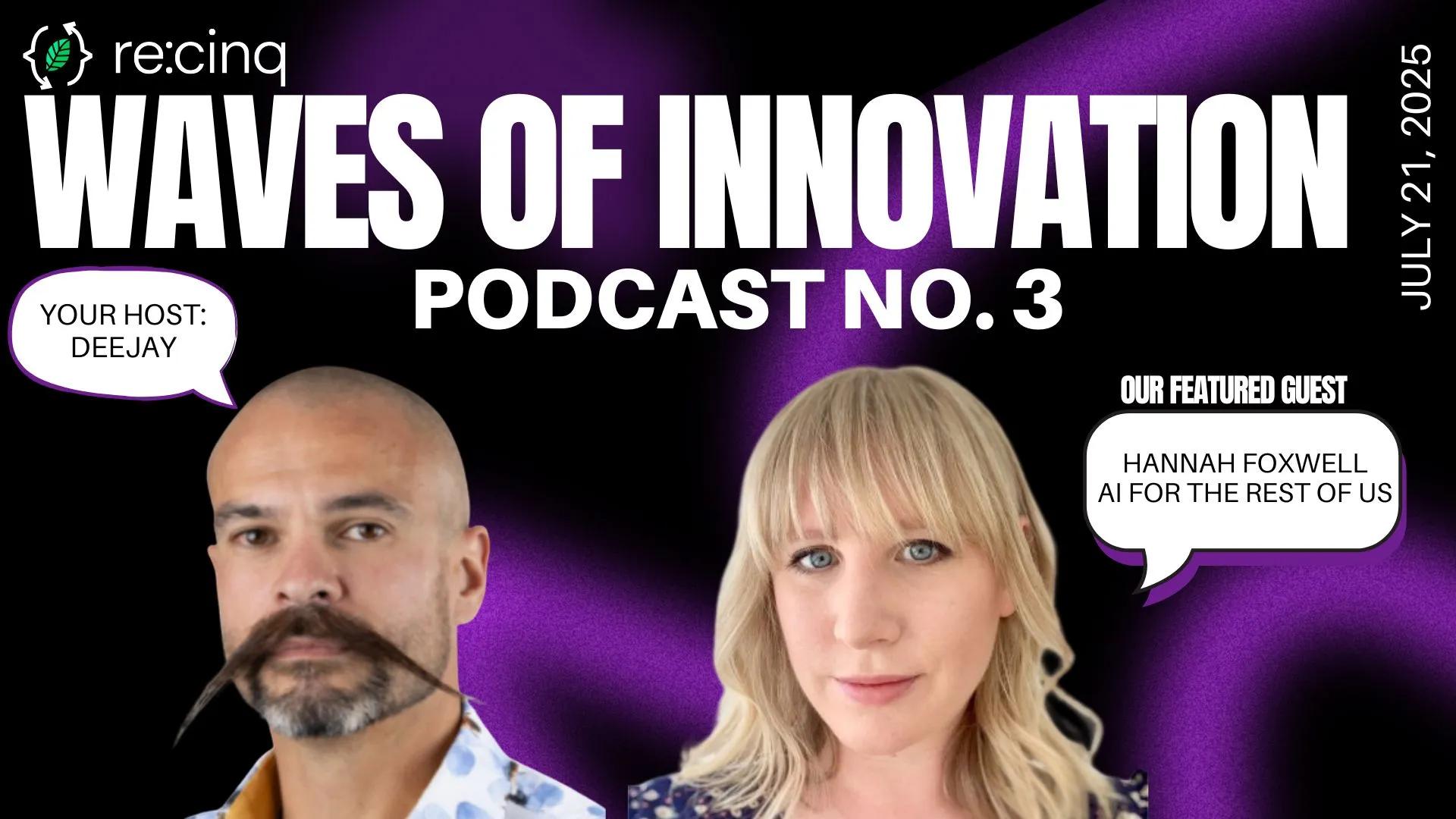
Hannah Foxwell on why AI fluency is essential for all tech professionals. Drawing parallels between DevOps and AI, focusing on real business impact.
Hosted by
Deejay
Featuring
Hannah Foxwell
Guest Role & Company
Advisor, Creator, Speaker, Writer @ AI for the rest of us
Guest Socials
Episode Transcript
welcome to the waves of innovation podcast in this episode I am talking to Hannah Foxwell who has an absolute wealth of experience across the industry Hannah currently runs AI for the rest of us a community and a conference that aims to make AI accessible to everybody stick around until the end to receive a discount code from the upcoming AI for the rest of us conference in October in London Hannah likes to keep herself busy she is also an advisor at two AI startups one of which is Leepta a German company that has just received pre seed funding of €2 million and they take a very different approach to gen AI in coding they go for a visual first system of building logic blueprints and from which code is derived rather than going from code upwards she is also an advisor at Helix ML which is a self hosted turnkey AI platform solution Hannah has done everything from waterfall project management early in her career to getting involved in Devops and starting her own Devops consultancy being involved in Devops Days London for many years in a row she has also been a product manager she's been a director of professional services in which she helped people with platform as a product which in turn brought her into the Team Topologies community so in terms of different methodologies and ways of doing things that have changed in the last 15 years in the it industry Hannah has seen a lot of things and hopefully you'll benefit from that in this episode Anna Foxwell AI for the rest of us it's a conference it's a meet up it's a website it's a newsletter it's a community tell us all about it yes I was supposed to be taking a career break last summer but apparently I'm not very good at sitting still and doing nothing and so I thought to myself I need a project uh and AI for the rest of us was really born out of my own personal experience and my own need to learn more about AI and to become fluent in AI so I went to I went to a conference um last spring it was actually and I I sat in on some talks about AI and I was absolutely bamboozled by all of the new words and terminology and this is me having worked in tech my entire career um LED software development teams I realized I had this massive blind spot I sat there and I literally I googled the word inference because they were the person was on the stage using this word as though everybody had been using this word forever and for and and for me I don't know how but I did not know what that word was I was like what is this they are talking about inference as a service like whatever and so I was like googling that and all of all of these other words like quantization and stuff and I was like what like this is this is bonkers this is a whole new land and so I tried to find like after this moment of realization that I knew nothing I tried to find resources that would basically teach me what I needed to know about AI but without all of like really complicated and deep linear algebra sort of conceptually I can think about how a neural network would work but I'm never gonna build one I'm never gonna build a machine learning model I'm never gonna sort of fine tune something like I this is not the level I need I need to know from a technology point of view what can it do for me how do I work with it like safely securely what about scalability what is it good for what is it not good for what are the risks and pitfalls and I was looking for that and I couldn't find it and so I decided to create it so AI for the rest of us is basically a very selfish bro cause it's for people like me I don't want it dumb down to the magical black box does magic but I also don't need to know the very very deep level of how the internals of the model works I guess it's about how do we build with this technology rather than how do I use this technology it's a slightly different thing so so yes um I ran the first conference you were there uh last October and it was fabulous and so I decided to keep going I was like there's obviously a need here um as more and more people have those moments that I had of like oh gosh I've got a massive blind spot here more and more people are drawn to this community and we're now over 850 people in the Meetup community and the second edition of the conference has been announced and we've got some incredible speakers coming along and again it's with the absolute same intent as it always has been to create a really non judgmental accessible practical AI learning experience so you can actually start to navigate this new domain so that you could learn the language and so that we could all basically have better conversations and make better decisions about how we use AI now the yeah thing about I think we were talking earlier about AI fluency in in in the language and understanding it certainly seems to be the case that because there's such a wide hubbub um in the the the general population you know the politicians are talking about newspapers are talking about social media is full of it everybody knows that AI is a thing lots of people are slightly fuzzy about what exactly it can and can't do and even from the technologist's perspective for practitioners a lot of the terms are not very well defined you know you read things like this a Riley AI engineering book and there's so many disclaimers in there of like well this term is used by this bunch of people to mean this thing and this exact same term is used to mean something completely different over there yeah exactly I mean that is a forever problem in tech but it's useful actually that that that book like gives a bit of a disclaimer about it to these populations these things because that's like it's it's very contextual isn't it yeah and the people cannot make good use of the technology if they can't talk about it really like to your point about knowing enough to not just what can I do with it but what can I build with it so I'm not just necessarily a consumer but I'm somebody that can actually apply this to more important things and actually there's a thing there about ownership and of having agency over your AI future if you know how to compose things and what you can build with it that's different to just being a passive consumer of like hey I've got a chat GPT subscription and you know I can ask it questions well the thing is there's so many jobs that are genuinely going to be reshaped and disrupted by AI tools and we're only just at the beginning of this you know there's innovative companies who are placing bets and getting really good results with AI agents with AI automated workflows even like AI coding assistance you know it's touching lots and lots of different careers and jobs and domains and it's doing it all simultaneously and I think that you know one of the things having worked in transformation like um from a technology point of view is that you know you will always have your early adopters and then your sort of lagging majority but you get to sort of help shape the future if you sort of lean in and you you're part of the conversation I I do talk about this because it's something that I remember very vividly about the early days of Devops really like reading the book Continuous Delivery and taking it back to your waterfall organisation and going I believe this is a better way but it was really culty it was really culty but I feel like we're really at that point with AI at the moment you were and I'm like let's build some agents haha I believe it is possible and I've seen just enough to believe but yeah if you want to take your career in that direction there's no end of opportunities because there is such a skills gap and it's not all about engineering like I'm not an engineer I wouldn't say that I'm very comfortable working with engineers because I speak their language and that's sort of the same with AI I want to be able to speak that language so I can work with the tech and work with the tools and make sense when I'm like um having a dialogue with experts the uh points about the fact that this ways that you can take your career in AI related directions that's sort of multi dimensional in that like you know we we both come from a tech background doing cloud and platform and the uh transformation and that sort of thing so there's a natural kind of inclination to think about developers and how they're using gen AI but then there are so many other job roles and industries and sectors where people are going to be able to leverage this technology to make themselves more productive and although it was from a tech background I was talking to a chap called Elliot BT the other day who's at works for a company called fruition and he made a good point when in regards to software developers that senior developers are not gonna get replaced by AI they're gonna get replaced by other senior developers that leverage gen AI you know so if you're if you're not keeping contemporary with the the tools that are available and the possibilities there then you know that's a potential risk to your employability in future it is it is again like there's the two dimensions there's the developers who are using AI to assist them in their work and then there's the developers who are really curious to build solutions with these underlying technologies as kind of components you know I can I can integrate with the like an LLM through an API fantastic what can I build with that there's so much opportunity there but going back to like how we how we remain sort of relevant in our jobs I do think that like the toolkit for a developer has changed now and there's techniques that you can use to get the best out of AI coding assistance like cursor and things like that and I think those are some of the emerging practices that are actually mainstream yet you know we do that vibe code where it's just like I'm paying no attention LA LA LA and the other end of the spectrum is like I'm very intentional and specific about what I want the the code to look like and how I want it to work and those folks are getting are getting better results because it's you're not delegating a lot of the important decision making to an LLM you're guiding it it is just part of our toolkit now and I think those those are emerging practices but eventually those emerging practices will be the things that we teach juniors but we haven't figured out what those emerging practices are because the underlying technology changes so quickly and so fundamentally that you think you've kind of grasped it and then a new model will come out that's better at some other things so I think it will it will stabilize and then these these emerging practices for AI driven and prompt driven software development will be the things that we teach our juniors and everything will be normal again we just have a different tool in our toolkit but this transition phase is messy and so I guess the only thing you can do if you're a software developer today is to like really experiment and if you figure out a way of getting the best out of these tools share it because you're establishing yourself as like a person who is useful who is useful for navigating change and that's something that's forever true in technology isn't it absolutely the uh points about juniors and and this transition period being a little bit rough I would not wanna be a junior developer right now I really feel for the people that have kind of just come out of university just come out of a coding boot camp they know how to program but you know need more guidance and and tutoring that is going to be a really tricky situation to be in because the going to your point about the techniques that you can use to to guide gen AI in the coding process it's a lot like breaking down a backlog into really granular stories for the sake of keeping a junior developer on track you know very explicit outcomes this is exactly how I want you to do it go and fill in the gaps so I I know people like friends that we have in common who have said that I I was looking at hiring a junior I reckon I can now address that um capacity problem with gen AI so instead I'm gonna hire someone more senior and hire for capability rather than capacity I mean that's tactical isn't it but it's not great long term like we need a talent pipeline we are gonna like we're not gonna have enough developers in the world if we don't bring the next generation on but yeah you're right it's kind of the new normal where we have to make those trade offs I think denying it is also a bit naive where we can say OK there's this amount of work that AI can AI tools can do in any job this isn't just about developers AI can do pretty reliably to think that we are going to go backwards and start giving those jobs to humans again is a bit naive I think that's the new normal and I think what we haven't done is we haven't caught up with the education we need so that people can come in at that level that's one not above the AI tools cause that's where we start to add the value again there are companies today that hire juniors and don't do a very good job of training them and supporting them and so those companies are not gonna get any better with AI tools it would be disappointing if we had companies that were great at bringing on juniors and training them who abandoned that as a capability but yes money is money if you have choices to make about where to spend it then maybe make choices differently now you have seen the transition you know the advent of Devops was that your first foray into the tech industry or were you already doing things before that so yeah kind of it was a bit of a um crossroads in my career because I started off working at Tesco dot com so I was helping the Tesco Groceries sort of online business and I was working within that tech delivery team and that was during a time when we were going through like agile transformation and things like that we were really lucky in this one program of work that I worked on where we had a greenfield project so it was the international grocery businesses so we had a very very unique sort of project from the perspective that there was nothing no technology there and so we could adopt a lot of new practices and that was really the crossroads where um I got very interested in what is the best way to deliver software um so that's my history that's how I got into continues delivery Devops and and transformation and eventually sort of the cloud native and platform engineering stuff that um I've been doing more recently but yeah that was like the moment going from like waterfall delivery and being the project manager of those waterfall delivery plans to a much more automated continuous delivery approach like I said like believing it was possible to do these things differently and so I think yeah going through that once before is kind of helped me see the opportunity with AI maybe and go like oh yeah OK so this this feels like it did 15 years ago with Devops this feels like the same thing again and there are lots and lots of people at the beginning like when and Devoux was like the peak of its hype who really believed that it was a it was solved and then it turned out to be a human problem a cultural problem a change management problem as much as it ever was a tools and technology problem so yes I think we're all gonna go through that messy kind of um exploratory phase of AI adoption and good practices will emerge um and we'll sort of coalesce around technologies but we're not there yet how do you think that the AI native wave we're not quite sure yet what AI native really means but the the kind of incoming wave of AI innovation how do you think that compares to like Devops the whole cloud native movements and then AI in my mind I can see those getting bigger and having wider impacts like Devops was a kind of niche movement for hardcore engineers you know I don't think there were many board members going we need to do Devops it would be great if they if they had have done it was the opposite I think our CEO um said don't talk to me about Devops I don't wanna hear it so no I I actually don't think I think it's a really uh it's instead of all of these like technology transformations that we may have seen first hand as people who work in technology cloud and Devops and Kubanettis and containers and all of that good stuff like this is a this is driven top down to a certain point of view there's so much potential and opportunity now that generative AI has got so good and it is so commoditize that it is so easy to adopt everyone is trying to figure out what it means for them and this is where I go back to the sort of AI fluency thing because I would not have told you this time last year that I would be working as a sort of AI strategy consultant but it is a reality and it's because people need help and I've spent a year teaching myself about AI and navigating it from an like an enterprise technology point of view that I'm quite useful already and I've got less than a year experience because I've invested time in learning how to speak the language I know enough about the challenges of software development to understand what's realistic and maybe where the opportunities are so so yes instead of make imagining that you're gonna automate your entire workforce like out of out of a job tomorrow let's start by incubating some new technologies let's bring some skill let's upskill let's capture some of those repeating patterns and build developer platforms around it let's make it really easy for dev teams to consume new services in a standardized way and provide them with education on how to do that safely and securely and reliably instead of having everyone trying to figure it out for themselves if I was to give anybody any advice right now if you're thinking about how you personally in your career navigates this this change it is just that curiosity to learn how to speak this language because there's not enough people at the moment there really isn't and if you can speak the language of AI you don't need to be a builder if you can help others navigate it feel more comfortable with it help them make decisions around what a good use case is what it isn't then you'll be well set honestly you'll be you'll be flying like every everyone needs this right now they shouldn't be asking external people you know like they should be providing their team with enough time to go and explore on that note Elliot's who I spoke to last week and maybe in the previous episode maybe the next episode I don't know which order we're gonna release these in hopefully in the order we recorded them otherwise this is not gonna make very much sense but he was talking about giving his team AI Thursdays so do whatever you're doing today but use AI as part of the solution whether it's gen AI for the coding whether it's you know implementing a product feature using a model or or something like that and I think those kind of things are gonna be important because with this driven more top down than bottom up I've been really surprised about you know I I've worked with some really amazing engineers fantastic people you know much much smarter than me which to be fair isn't hard but they're the kind of curious programmer types that you know tinker on things in the evenings and the weekend and even those folks are not exactly late to the party but they are only just immersing themselves in it now and starting to see uh some of the possibilities of like you know having agents that look at your cubanitis cluster and automatically debug and and fix things so if people like that are only just coming to terms with things it it shows that there's definitely a a kind of pent up need for more education and more skills in the workforce uh chat GBT was released while I was working at sneak and I had my blinkers on a really high pressure role where you know I was leading Sneak Container and we had a lot of work to do like we were on the critical path or an awful lot of the key initiatives or a sneak that year and you know I had laser focus like on achieving those things and I did not have any mental capacity to go and have a little play around with chat GPT and I think that's the position that so many people in tech are in where it's like I understand the mission I am focused on the mission this feels like a distraction right now and so it's hard actually and I could think that's why so many companies are opting to do these like hackathons and things like that where they intentionally create space because everyone's natural instinct you know is to focus on delivery and to stay on track and to you know trashing your roadmap is like one of the hardest things you can do as a product person like you know just go like we were wrong like let's do this is that that's like but that's what a lot of people are facing right now um as they get to grips with like like what's the potential opportunity what are the problems that we can tackle today that we didn't even dream about yesterday because of this new technology we can use if some trashing your roadmap might be the hard right thing yeah when you're in that pioneering mode in terms of an incoming way of innovation you need to have Slack in the system if if you don't have any Slack in the system you can't innovate you you you are maybe you're gonna achieve your short term goals but it's like a hyper evolved organism in an ecosystem you know a cheetah is very good at one thing running really bloody fast and you know catching gazelle or whatever but any kind of perturbations in that environment in its ecosystem it's not a Jack of all trades it doesn't have the ability to do anything else it's good at one thing and one thing only so it's in a very fragile position so I think maybe that's one of the commonalities between you know when we think about um the advent of Devops and uh cloud native and platforms you know it was hard for people to be working I mean how many times do we see that in the cloud native space of like I don't have time to automate things I'm too busy manually fixing problems yeah it's it's so true you do need a bit of slack in the system I I have too many jobs at the moment but one of them is is building teams of AI agents and I love this because it's like it's that the job I do that's really hands on and like I can actually do experiments with this tech they all have names I should really not interrupt but I'm just keen to know like I wouldn't be surprised if you've named all of yours no no I think of them as tiny little computer programs'cause that's what they are but but yeah no I haven't they've got very very functional names like I am the document writer agent and I write the document because it's all new and there's no guidebook of how you do this you're experimenting all the time like what sort of prompt template shall I use like what tool configuration things like that and you can spend weeks focusing on one small challenge that you thought would be easy and then the next day like last week I got my agent writing a document and it worked first time and I was like oh my God look at it go and it's just it's one of those things it's you like knock down each barrier as it sort of comes up it's like OK I can do this now can I do this next and you're iterating through it and you've got absolutely no idea how long anything is gonna take because it's not standardized um it's not predictable no one's written you a how to guide it's fun but like you said you do need that space for experimentation you can't do this work on a deadline because it's like a breaking new ground uh most of the time I'm sure there are so many companies out there have like wrapped up their little solution in a bow you get the um like the AI business development bots the ones that do all your cold outreach for you someone's wrapped a prompt in a bow and they've sold it to you as a product basically they're never gonna share how they got that prompt working are they that's their IP and so I do think that there's there's maybe there's maybe more sharing that we could be doing about how to get these things working in the real world but uh everyone's very protective of that at the moment absolutely it would be great to have more of that are you having a more engineering focused track at AI for the rest of us the conference this year was there more of a kind of practitioner's one so it may be very reflective of my network but I also think it's reflective of the needs in businesses right now so last year 58% of the folks who attended the conference worked in software development either as engineers data scientists product people um they were working in software in some way and I thought actually how do I serve that audience a little bit better and a bit more intentionally this year and so they'll be a day focused on developer experience and AI tools for the software development life cycle so that is everything from AI code generators to automated security to testing um so what can we do to get better at our work as um as people in software development and then on the second day it will be and this is this is a question I get asked by a lot of people it's like how do I get started with AI engineering like someone's asked me to integrate and I like and you don't know what you don't know in that track we're gonna be talking about building a platform around LLS to make them easily consumable we're gonna be talking about how to write your first eval we're gonna be talking about MCP and how to use that safely and securely because it's a fantastic standard but it does leave the front door open somewhat to um as an attack vector so really providing some practical guidance on some of these really common architectural patterns that you might adopt in your organisation around large language models and educating people on how to do that the right way so that should be good we also have some technical hands on workshops as well which is another new addition so last year people asked for hands on workshops instead of having three tracks that are all presentation based sitting and listening it's two presentation based tech tracks and a room dedicated to hands on workshops so that you can actually get to grips with this technology so hopefully that format will be even better than last year waves of innovation by re:cinq is more than a podcast it's a growing community where people across tech come together to navigate the AI native wave if you're enjoying this then please sign up to our free weekly newsletter drop into our live events and keep an eye out for the pattern library and book we're releasing soon everything we make is free because no one should surf this wave alone thanks for being part of the conversation now back to the episode going back to the the topic of kind of fluency and the number of different audiences there are it struck me going to a lot of the London AI meetups that there's such a breadth of of people there with very different motivations you get the kind of individuals who are I'm gonna be an AI entrepreneur you get occasionally kind of development managers looking like how how do I tell the CEO that we can't get rid of all the developers because of gen AI there are people who wants advice actually building systems that leverage um AI as part of the product offering rather than just using gen AI as a kind of coding assistant that there's all of these kind of different audiences have you spotted any patterns of those kind of uh EBM flows in terms of the makeup of uh your meetup and the the conference and the community over time or has it remained fairly constant the two answers to this question um so one is is yes I think I have seen a change from people who are maybe just getting started and who are asking more questions about where should I start to people who are actually doing experiments and getting hands on with the tech that's definitely a change I did not meet many people at the conference last year who were working with AI agents but we ran a meet up a few weeks ago and there were there were a handful of people in the room whose job it was and they were building AI agents and so that's that's happened quickly as I was like you should have seen the number of submissions to the conference CFP that were about AI agents I was like I can't run a conference about just AI agents it's like but apparently this is the year of the agent isn't it but the other the other answer to this question dad is actually running an AI conference and running an AI meetup the audience is very self selecting and people who are already curious about AI are showing up and one of the things that I've been thinking about recently is like how do I reach out into communities that aren't engaged yet how do I help the people who are maybe don't know where to begin how do I help the people who don't understand the opportunity and who could benefit from that opportunity right now job seekers for example like how do I like how do I reach them and that's something that I'm thinking about at the moment because um an AI conference full of AI enthusiasts wouldn't achieve the objective of like um bringing more people into this um into this world so so yes answers on a postcard please um if you're listening to this podcast and you're a member of a community who could really benefit from a boot camp in a high fluency please drop me a DM I would love to partner with your community it's a tricky problem because the the kind of you know you can only reach your network easily and and directly and we we both worked in tech for for decades so we tend to find that audience quite quickly but we at recent we've been working more with SMEs and people completely outside of the it sector people that don't have their own it departments don't have any software developers and the sorts of uh business value that can be delivered there with kind of tactical business operation solutions absolutely massive you know there there's so much opportunity there and these people know that AI is a thing and that they should probably find out more about it but but actually reaching them because it's not one addressable market you know you've got like industrial manufacturers you've got architects yeah it's all sort accountants there's all sorts of different groups have to do a roadshow have to go around all the countries again it's like finding um getting outside of my bubble um and you know one of the talks that was submitted um I'm still waiting for the speaker to confirm I really really hope he does um is a guy that has been working with his kid's school to help teachers understand AI and how that it's gonna affect their world and I'm like that's brilliant that's brilliant I'm not sure my conference is quite the right target for for teachers but if you're a secondary school teacher and you want to be able to have a good and well rounded conversation with your students about AI then absolutely like my my conference and the meet up and the community is a great place to start for that it's all very reminiscent of the the dot com boom and you know the advent of the internet and the the mid 90s I remember being online well before most of my teachers were and you know I had to explain to what a search engine was and where I was pulling this you know material down I was printing out to give in in my assignments it's it's uncomfortable for a lot of people it's uncomfortable at work because you can't ask your manager what should I be what should I do with AI and your manager is uncomfortable because they're like I can't give you an answer like I don't know um educators consultants like everyone's trying to figure figure it out at the same time um and honestly like I think um anyone who thinks that anyone who comes and proposes that they've got an answer is probably the person I um trust the least ha ha ha cause we are all figuring it out our way and it's absolutely very situational and you do if any of these transformations that we've been through before this um have have taught me anything is that you need to have your eyes open like and you need to you need to spot those like emerging patterns of success um and then you need to try them for yourself the rate at which the field advances is so rapid like the the cloud native ecosystem was pretty fast moving but it were this is like an order of magnitude uh harder to keep up with because there were so many different dimensions to it on that note of keeping up with things we talked about trying to keep Slack in the system and we mentioned hackathons and kind of AI days are there any other patterns that you've seen or uh success stories that you've seen in prior waves of innovation be it Devops be it cloud native that you think would be particularly applicable here or things that you think people should do or or consider doing yeah absolutely so you've read team topologies haven't you I haven't date so um for anyone who um is listening and has a hasn't read team topologies that I cannot recommend it highly enough that's a great book there's sort of two patterns in there that I would point to as things that are probably going to play out again with AI the first one is platforms and kind of removing that additional cognitive load from the teams who are consuming AI and I think that sort of that sits adjacent to the platform engineering domain but it's almost a specialism within it like how do we build internal tools that help us leverage this technology but with got like with the right guardrails around them the right security the right standards best practices around reliability all of that good stuff otherwise you will get 20 teams implementing essentially the same thing in 20 different ways varying degrees of success so I think that's probably something I would say we can expect a bit of that I actually gave a talk about platform engineering for AI platforms at qcon this year and I think that's that talk's available on on YouTube as well so making a few predictions about what we've seen before and some of these capabilities in our platform layer that we might want to we might want to support the the second is the enabling team the enabling team the team who exists in your organization with the purpose of helping other people get to grips with new stuff um helping like helping them evolve getting their feedback incorporating that into your internal products and processes I think the role of the enabling team when it comes to AI is also incredibly important and that doesn't have to be in the technical domain if you don't have an enabling team that's helping your your business teams and your operations teams be more productive by actually using the tools then you're probably missing a trick um having somebody who's internal like you could get external consultants say they could do training and then they disappear and then like invest in your own invest in invest in your own people and have them right there on hand um as almost power users that's something that I would love to see more of absolutely yeah you totally read my mind on that one that enabling team function I can imagine being super important if we want to see the benefits of AI more broadly than in just software development where to be honest you know Elliot was talking about uh velocity gains of 250% in a few months from adopting gen AI but I'm not sure that that's gonna be where the main productivity gains uh in general are gonna be it's gonna be in in the rest of the business that has up until recently kind of been ignored by it because solving their problems through um handcrafted very specific software would have been cost prohibitive you know building something that was very specific to a set of requirements and um getting the the project management machinery geared up finding somewhere for it to fit in the product pipeline and do we have capacity do we do we have availability all of those sorts of things have kind of gone away now that um uh we're not gone away but it's the barrier of entry is so much lower with kind of low code um AI based solutions and and even just you know building things with uh agents with LLMs in that can meet users where they are if users want to use Excel to to as their primary data source sure you know we can have an LLM read that it can figure out if you've put the date format in slightly wrong in one of the rows rather than just throwing an error um you know if you want to interact with it via Ms teams sure knock yourself out instead of us building a a web UI so I can imagine that when people talk about um trying to reduce developer headcount I'm really not sure that that's there's gonna be a net reduction in fact I think there's probably gonna be the opposite because everyone's gonna be out like I mean don't don't be silly have you ever met a team with like you know where you could see the end of the backlog like oh I think we're done now like I think I think we've absolutely run out of ideas um no like the every team I've ever worked in um as had 2 or 3 years worth of work and so you you get you make that team more productive great you get you might get further down that backlog but it's it doesn't end I've never ever known it to end and they they and so the constraints are what the constraints have always been which is how much available budget do you have um and are you solving the right problems um I think you know the budget question is about your situation as a business um but the are we solving the right problems becomes even more important I think um because there's potential to solve a whole lot more of um irrelevant problems I wonder why all of this increase in like productivity isn't moving the needle as a business um or isn't moving the needle as a product so so yeah hang on there's um so I I I'm working on a talk about software productivity um at the moment and and that's one of the fundamental questions I keep coming back to is how rare it is for product initiatives to be clearly aligned with a a business outcome and a strategy to try and achieve that so often it's just like build the thing why well because somebody in charge said that we should and then how do we work out if we've actually delivered value or not if it's we don't know whether it's useful it's um and you know uh pivotal and Pivotal Labs rest in peace if it was one thing they were good at it was um what problem are we trying to solve exactly it's an incredibly important question and one that sucks the joy out of a lot of creative endeavours it's like oh I just did it because it was cool and I wanted to but like you know yeah but the thing is it was it like um with with you know call it vibe coding low code or whatever like um we can we can test um for a lot lower cost that we're actually solving the right problem how many features have quite kind of made it half baked into production um and haven't really got the usage because you haven't been able to read like it's just on to the next thing cause that developer pipeline that like the constraint that you have there it's like oh we better move on to the next thing rather than making the thing you're working on really good actually taking the time to iterate on it and get user feedback um that's a common common problem I see and I think the teams that will really surge ahead with the adoption of AI tools are the ones that have that muscle memory around making data based decisions like to defining the problem user research really really having um a like a strong kind of culture around making sure that you're building what your users need I think those folks will have like because every everything that you do will potentially move the needle if you're just doing things because the boss said so um or like you're not you're not measuring the impact or you haven't framed what you're building in terms of the business impact you actually wanted to have then you're just you're just a feature factory and you're an AI powered feature factory now but you're still a feature factory you can do the wrong thing even more quickly now yes exactly one of the things that I find crazy is that genuinely it seems that CEOs are asking CTOs and tech leaders to to you know how many developers can we get rid of what now we're using Gen AI it's I'm a member of CTO Craft another great community that um tech leaders should probably be a part of and every few weeks there's um some poor beleaguered uh tech leader you know trying to defend their team from impending cuts but one thing I really don't understand is how many of those CEOs are already perfectly happy with how much is getting delivered like everything's going fast enough I don't want it to go any faster this is fine so let's just keep things where they are and save some cost like that's never been any CEO ever right they've always wanted things to go faster and get to the further down that backlog like you mentioned this may come across as controversial but um I think we're entering a sort of new era for folks in in our sort of careers and people who work in tech um especially engineers because we've been a bit coddled with our beer pumps and our like flexible working and like honestly the luxury of having someone called a scrum master who's there to solve your problems for you so you don't have to solve them yourself like oh you got an impediment let me take that on for you like oh we've been so coddled as an industry and I think the coddling's over I think we have to deliver impact um and the days of like the diva developers who are coddled and who cannot be like who just like just work through a backlog of tickets might be over actually if the writing of the code is is not your responsibility anymore then let's reframe our responsibility like it's to our users it's to our business and how do we make sure that we're having an impact um so yeah I I think that you're right there's no CEO ever who's gonna go like I don't want to get more done and I don't want like I don't want to save money that's like that's a universal truth but I think we've been protected from it um I think we've been very sheltered from it because of the skill shortage that we were suffering from like for in like most part for last decade um finding a good developer was so hard wasn't it absolutely yeah and I think it's probably still true it's just that the conversation has changed I I do hope that if all of the AI powered low code solutions and prototyping tools turn out to be as um effective as as we hope they are that in many ways it kind of takes the industry back 30 years you know when you read about extreme programming in in the original book the idea of prototyping something next to a business user to kind of go hey is this what you want sure great OK no I'll change that yes yeah fast feedback on that front and when you think about what's changed between now and then you know building desktop apps or client server apps with a fairly limited architecture was fairly straightforward but the level of complexity behind the scenes that we've had in the cloud native era and the era of distributed computing has made the barrier of entry and the cost of change so much higher despite all of the best efforts of um you know people working on automation and C I C d pipelines and and platforms and things like that it's still massively complicated and I don't think that complexity is gone away but it has been kind of hidden a lot better by some of the you know AI powered prototyping tools so maybe we can go back to a world where we do end up being much more user focused and customer focused because we can be in touch with them we can iterate on their requirements much more quickly yeah yeah absolutely uh one company that I work with called Leapster um are really taking a very novel approach to that they um they've they've created an interface that all almost like is a bit more than like a no code or low code tool but it visualises the code so it's like you you prompt what you wanted to do and then it visualises the solution so you can literally like rather than showing a business user lines and lines of code that might be written by Chris and going like does that do what you want like you can show a diagram of like this is the sort of process we're like we're imagining what have we missed like very visually and that's a lot more human than the way we do the way we do software at the moment um you know at the moment I think a lot of coding tools they still imagine that there is an interface between a business person and an engineer in terms of tickets and requirements and things like that but when your intent is natural language like with through your prompt is there a is it necessarily the right hand off point um so I think I think there's a lot there's a lot of opportunity there to to to do more of that like like you said to actually get much much closer to the business and to change that that endless sort of backlog shuffling um requirements capture because if you're if you can write a document with your requirements in it then you can probably write a prompt with your requirements in it that's not a that's not a dissimilar process and how much waste are we adding but with this um the the way we currently work with these handoffs and I think it will lead to an interesting insight about what the nature of programming really is being big fans of uh pair programming you know you you worked at pivotal uh we worked with pivotal and we're very big fans of XP and pairing a common objection was you know why you've got two people doing one person's job it's like well it's not the typing that's the slow part it's the the figuring out the how to implement this and there's something I think about transmuting requirements that's somewhat vague and in natural human language into what is for the given context the most simple possible solution like there there's always a minimal amount of complexity when you're implementing anything beyond which like it it can't be reduced further cause you know what you're doing might be quite complicated if you're ordering an Uber the the background information flows in that or that there's a fundamental complexity to that that can't be resolved any further and so the job of a developer is often like refining complexity down it's like chipping stuff away off of a stone to find the the truth inside for that given requirement what is the fundamental unavoidable complexity there and if uh gen AI solutions need that amount of guidance maybe we will end up with product people becoming much more like programmers in the the work they will be doing as as well as all the other wonderful things that product people do about finding out you know customer needs balancing out with the business and all of that kind of entire domain maybe they will end up kind of taking on that uh reduction of complexity of what is the fundamental computation that needs to happen here because I'm going to need to explain it to uh you know clawed code or whatever it's it's gonna be fascinating cause I already know like a load of product people who are just so excited about like vibe coding and the fact that they can build a prototype they're going loveable they build what like um you know you go in cursor you can get you get so far so far on your own as a product person which is very liberating um you're not having to negotiate for like um prioritization or or like um scope and things like that but there's a hell of a difference between what you can prototype and what is going to make like a reliable and scalable like you know for enterprise kind of grade production system and I think that's where like that's where we'll always always um need need need developers and where we'll will benefit from having you know strong opinions about about how we build things right um but yeah I like I think product people who are infused to to get hands on have no barriers to entry now and I think um they sort of move closer to development and then developers who are are not heads down in in code and syntax all day long have this um also this opportunity to have more impact through their work by you know by taking a step back and go like OK well how do we solve this problem like what problem are we solving so I think there's there's an opportunity on both sides and we're gonna meet in the middle in like a lovely happy place but um yeah I I like the idea of kind of I'm an eternal optimist aren't I or it could be a different kind of like organizational war than the ones we fought before like dev versus ops I like product racing that video yes let's try and hope that there aren't uh more silos that created more fences to to chuck things up uh and over in the uh AI native future you you mentioned earlier um some of the work you're doing with Leapster um are you able to go into any of the other kind of work that you've been doing in the last year more on the consultive side without obviously telling us any confidential information but the kind of challenges that you're seeing or the kind of problems that people have that are that are common I love to talk about them cause I'm very fussy about my work really I have to kind of believe that that I believe in the product and the team um the first the first folks I started working with are Helix um Helix ML and I I talked about the um the Platform Engineering um presentation I did a cubecon earlier this year and that was very much based on the work I've done with Helix so they've taken um they've taken the position I think is a valid one that more and more enterprises will want to run open LLM models on their own infrastructure and they won't trust their data especially not um customer data sensitive financial data to one of the big LLM platforms because you don't know what they're using for their training data um and also in a regulated industry you just you just simply can't like delegate um that much responsibility to to um a black box solution essentially and so they've built a platform around that and it's very focused on developer tooling um so it's a developer toolkit that allows you to do things like C I C d for gen AI applications powered by your on prem LLM like so I heard about this platform I was like hell yeah like I can see that people are gonna want this and so I started working with them they were the very first people um I started working with and and and that's great we actually have Helix 2.0 coming out in July I'm not sure whether I'm supposed to have said that or not but look out for Helix 2.0 because that's got some amazing new features in it so yeah so Helix sort of solved that problem of data security data sovereignty whilst also attacking the developer experience base so what I was talking about earlier with the cognitive load and the reinvention that's going on at the moment with all the teams kind of picking up their their different sort of AI toolkit and building in a slightly different way kind of solves for that problem there's like a standardized way of of integrating these things into your applications uh another company who um I'm working with and uh the AI Security Collective which is a community in London but I'm working with Mindguard and they are a security tool but the thing I love about them is they've spun out of academia so this is a team of of researchers and academics who have been working for years on the problem of how can we detect the vulnerabilities that exist in models so um you've probably heard of like jailbreaking and things like that or um you can sort of um ex sometimes you can extract training data from models using certain techniques so they have built a solution that detects those AI specific vulnerabilities um within the models that you're using and so it's a tool for red teaming but also if you know which ways you're vulnerable you can actually defend against it if you don't know how you're vulnerable you can't do that and I'm always amazed at the number of companies who are willing to put an LLM based prompt based interface in front of their customers in terms of chat box and things like that because you do not know like most of these teams they do not know how they could be um they could how they could be easily so so easily manipulated um and so my God I've I've done like they they have an amazing product already um because it was born out of academia born out of research that says we think we we know we know we've proved that we can detect these type of vulnerabilities and now they're taking that to market I'm gonna keep plugging and then leap to um but the beauty of leap to is that you you create software solutions that can be understood and reasoned about very easily as a human instead of going having strolling AI generated code and having to go by line to line to make sure it's good and review it you get this visualization layer on top that helps you go is this correct future is where I build my AI agents that's the most fun out of them all actually cause I spend my days being building teams of AI agents um and we're much more we operate much more I would say away from the developer and the infrastructure sphere of organizations we um we operate in the knowledge layer so we pull together all of this enterprise knowledge and we build processes around it so that we can with our sort of agentic teams we can achieve the same outputs at the same quality of like multiple teams of humans that would take weeks to produce because we don't have handoffs we have access to the right data and we can facilitate the process automatically so that's very exciting as well anyway for the rest of us uh 2025 when's the date it is the 15th and 16th of October and for the listeners who have persevered through our meandering conversation there's a 20% discount code so wave 20 will get you 20% off a ticket for the conference if you've heard enough that you're ready to commit and join us for an AI learning experience like no other Hannah Foxwell it's been a pleasure as it always is when we talk um hopefully we will get to speak again and I will see you at the next event so there you have it thank you very much to Hannah for joining me on this episode and for generously sharing that discount code so if you want 20% off of your tickets to AI for the rest of London 2025 use the discount code WAVE20 as always if you have any feedback for us please get in touch via waves of innovation at .com that's r e dash C I n q.com we'd love to hear what you think needs improving and suggestions for other guests if you've enjoyed this please share it with other people be good to each other and we'll see you in the next one

Episode Highlights
Hannah argues that the era of coddled developers is over, and the focus must shift from writing code to delivering business impact.
Novel tools from companies like Leapter are visualizing AI-generated code, making software development more human-readable and collaborative.
The AI for the Rest of Us community was created after Hannah's personal experience feeling bamboozled by inaccessible AI jargon.
Hannah draws direct parallels between the current AI wave and the early, messy, culture-driven days of the DevOps transformation
GenAI poses a significant challenge for junior developers, as companies may now hire for senior capability over junior capacity.
AI fluency, the ability to speak the language of AI, is a critical skill for everyone—not just builders—to help navigate change.
True innovation in AI requires slack in the system, as its unpredictable, pioneering nature cannot be rushed by deadlines.
Citing Team Topologies, Hannah argues that internal enabling teams are crucial for helping the rest of the business adopt and effectively use new AI tools.
She warns that without a strong focus on user needs, AI productivity gains only turn you into an AI-powered feature factory, doing the wrong things faster.
Hannah believes that in this early, messy phase of AI adoption, the people who claim to have all the answers are the ones to be trusted the least.
Related Episodes
Share This Episode
https://re-cinq.com/podcast/ai-new-era-for-developers