Powered by ×
×
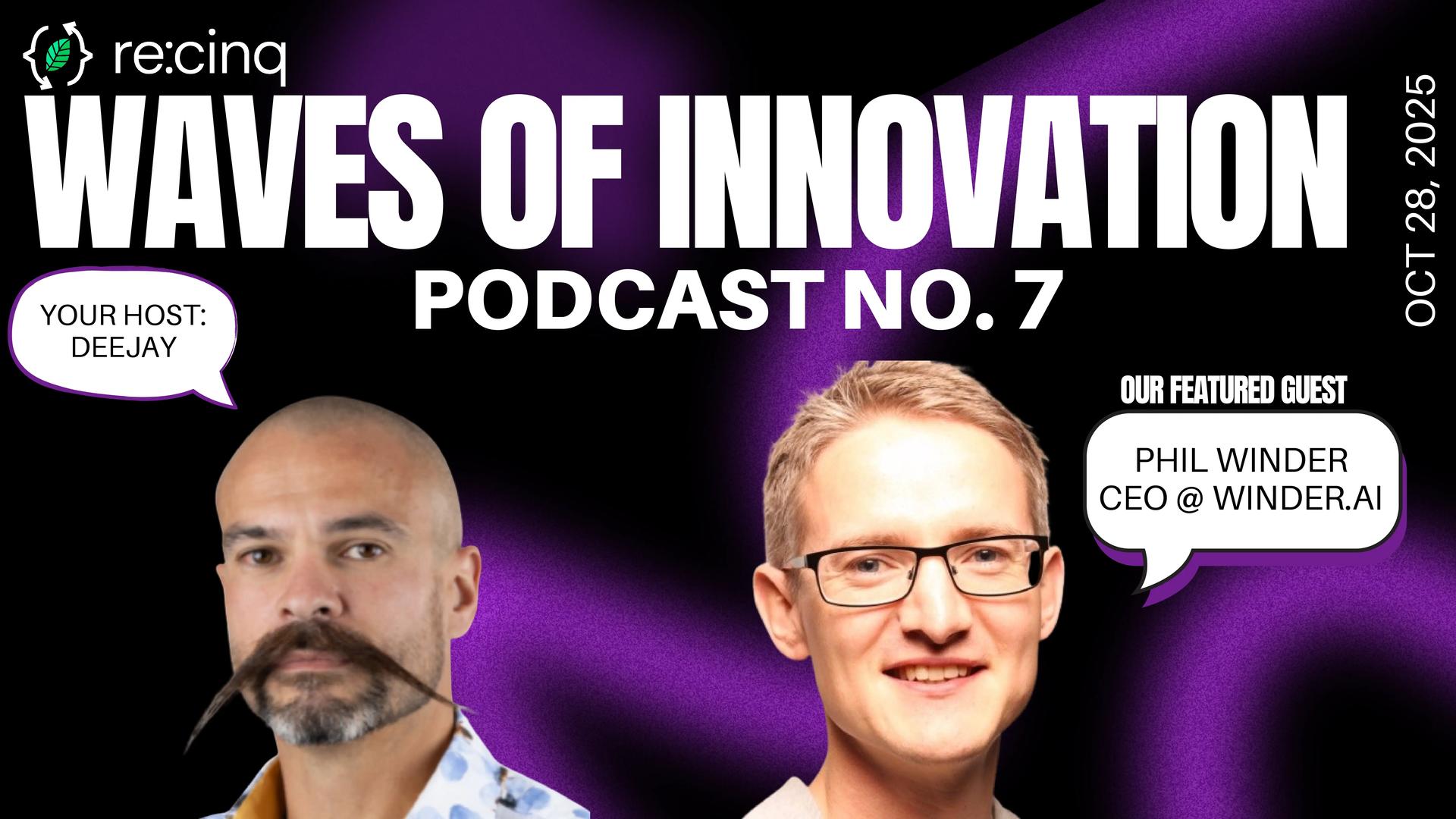
×Why AI Isn't Just More Software: A Guide to ML, MLOps, and Reinforcement Learning
With Phil Winder · Hosted by Deejay28 October 2025
Guest
PPhil WinderWinder.AI, CEO
LinkedInHost DeejayHead of Product, re:cinq@danieljoneseb
DeejayHead of Product, re:cinqOn This Podcast
Why can't you apply Agile sprints to an AI project? This episode dives into why ML development is 'fuzzy' and non-linear, unlike traditional software. We explore the 'nothing, nothing, something' problem that frustrates engineers and managers alike. Discover the real-world challenges of MLOps, from testing non-deterministic models to deployment. The conversation also breaks down Reinforcement Learning (RL), explaining how it learns from exploration, the high-stakes risks, and its role in training LLMs.
- Discusses why AI projects are 'fuzzy' and non-linear, unlike the prescriptive, plannable nature of traditional software engineering.
- Explains that ML models need to be 'massaged and babied' and often show 'nothing, nothing, something' progress, frustrating agile teams.
- Testing AI models is probabilistic, not pass/fail, requiring 'fuzzing' to find edge cases where the model lacks data.
- Reinforcement Learning (RL) is defined by its 'agency to explore' an environment, a key difference from other ML types.
- The biggest challenge in RL is the need for a safe simulation, as live exploration in industrial settings 'could be catastrophic.'
- 'Offline Reinforcement Learning' is a powerful alternative that can train effective agents purely from pre-existing logged data.
- Modern LLMs are already trained using RL, which uses human feedback to fine-tune models for better conversational behavior.
machine learningmlopsreinforcement learningai strategysoftware engineering
Agentic Engineering: Beyond Coding Assistants
23:48AI is no longer limited to generating code. Autonomous agents are beginning to plan work, execute complex development tasks, review pull requests, run tests, and collaborate alongside engineering teams. In this conversation, we examine what agentic engineering really means, where it creates measurable value, and what organisations need before they can safely adopt it at scale. We also discuss governance, trust, human oversight, and the changing role of software engineers in an increasingly autonomous development environment.
Building Software in the AI Era
20:56Artificial intelligence is fundamentally changing how software is designed, built, tested, and maintained. But beyond the excitement and rapid innovation, engineering leaders face a more important question: how do you introduce AI into real teams without disrupting delivery, quality, or developer experience? In this episode, we explore what AI-native software development actually looks like in practice, from adopting coding assistants and autonomous agents to redefining engineering workflows, architecture, and collaboration. Through real-world experiences and practical lessons, we separate lasting strategies from short-lived trends.
Modernizing Legacy Systems for an AI-Native Future
23:49Every organisation wants to embrace AI, but many are still constrained by legacy systems, outdated architectures, and fragmented development processes. This episode explores how engineering teams can modernize without starting from scratch. We discuss practical migration strategies, incremental modernization, technical debt, platform engineering, and how AI can accelerate transformation instead of introducing complexity. Whether you're maintaining enterprise software or building new digital products, this conversation offers practical guidance for long-term success.
More Episodes